Science places a priority: knowledge. It is ongoing, interrelated and accumulation. Unfortunately, in the field of biology has to deal with a significant delay compared to other sciences. This gap is rapidly closing due to a general interest that even forced flows from too rapid changes in the environment around us changes in climate on a global scale are an unequivocal testimonies. Understanding the evolution of the natural environment of our planet, analyze and understand what happened in the past two centuries and what impact this has, is and will have on the near future is the most urgent concern that modern man must solve. Evolution has always obeyed the rhythms and timing dictated by the conditions surrounding the large number of local ecosystems, where animals, plants and microorganisms interact and compete for better adaptation to surrounding conditions and within certain limits, to modify them. These changes never occur during the life of the individual organism, but they need a long time to allow the information collected and transferred to the scale of the descendants of adaptability to produce those changes necessary to ensure the survival of the species of reference. Biology and ecology assume, therefore, a strong interdisciplinary ties. The ecological and evolutionary mechanisms become closely interdependent. Man belongs to the animal kingdom, the class of mammals, the order of primates, the family of hominids, the genus Homo, the species homo sapiens, so it can not escape the great law of 'underlying the bio-ecological evolution.
All organisms, including humans, proceed on two tracks: one belongs to individual existence, the other the evolution of the species. The information contained in the genome remain unchanged in the life of the individual, but in time, then this message will change in offspring and gave new instructions for the adaptation of species to echo-environmental conditions surrounding it. No animal is conscious of this except the man who, thanks to its cultural evolution has taken note though only recently. The processes of adaptation and slower long only because the environmental change they are also subject to long and slow as unpredictable catastrophic events that occurred and determine the time of the dinosaurs to extinction. Maybe a huge meteorite or an unimaginable volcanic eruption produced a sudden change in environmental conditions which prevented the evolutionary adaptations to many species. Unfortunately the human animal through proteins during evolution, unlike other animals, have enabled him to develop the concept of the future, he constantly used all of the possible strategies to improve the quality of life for himself and for descendants. Prowler insatiable energy to the service of his selfishness, he pursued gradually and without discrimination, the advent of industrialization, the rush and conquest of the well-being, creating an exaggerated industrialization in the production of everything and more, though not evenly distributed ( but that's another story), by achieving emissions of greenhouse gases in the atmosphere that is causing mutations in the atmosphere at rates so fast towards the point of no return that will not allow the great laws of biology to conform to these times. Another great extinction is looming like
dinosaurs?
From
reliable sources:
“The climatic destabilization begins with the industrialization and unfortunately it continues to worse nowadays. In the half of the 19th century the carbon dioxide value was about 280 particles each million and only 100 years later the same value is increased up to 360 particles each million. From 1950 until 1999 only 11 countries have emitted 530, 3 milliards tons of carbon dioxide: the U.S.A. 186, 1 milliards, the European Union 127, 8 milliards, Russia 68, 4 milliards, China 57, 6 milliards, the Ukraine 21, 7 milliards, India 15, 5 milliards, Canada 14, 9 milliards, Poland 14, 4 milliards, South Africa 8, 5 milliards, Mexico 7, 8 milliards and Australia 7, 6 milliards.
If the carbon dioxide in the atmosphere increases, the molecules emit more heat which again can increase the global temperature. Carbon dioxide in combination with other types of greehouse gases like methane (about 10 % of the food, given to industrially grown up animals, are transformed in methane which ends in the atmosphere) and azote becomes a dangerous cocktail for the environment. The result of this mixture is the climatic instability. The IPCC (Intergovernmental Panel on Climate Change) publishes a study in 1994 which reveals that the emissions of carbon and petroleum have emitted an excessive quantity of sun heat. These alarming alterations have created high temperatures, extrem droughts and catastrophic alluviums in many parts of the globe; moreover, entire ecosystems have been irreversibly modificated and epidemics have cropped up.
After two years of work, a team with over 1000 scientists prooves in the study “Climate Change 2001”, that the temperatures of the planet will continue to increase: the minimum will be 2, 8 degrees until the end of this century.
This value is 100 % higher than the value foreseen of the same team 15 years ago in 1985. And if these 5, 8 degrees continue to increase in the same way?
Only this value would create disastrous damages on the ecosystems: alluviums, landslides, hurricanes, and all consequences such as lack of water, the development and spreading of new diseases; in fact, these ecological problems will not only cost milliards of dollars, but they will be the realization of apocalyptical visions.
The Global Commons Institute has estimated the costs, caused by the damages of the climatic change, about 200 milliards of dollars until 2005 and about 400 milliards of dollars until 2012. In the year 2051 they even could exceed the 20.000 milliards of dollars.
The first areas, hit by the climatic desasters, will be the coast areas because of the elevation of the sea – level: entire cities, little isle states and all their popolations could be devasted by hurricanes, violent stormes or the elevation of the sea. The increase of the surface sea – temperature up to 26 until 27 degrees is one of the conditions which create hurricanes in the tropic areas. The increase of the globe increases the sea - temperature a fact that favours the formation of hurricanes. These hurricanes represent one of the most destructive desasters with which we' ll have to deal with.
Once a time the hurricanes have been rare events, today they’ re always more frequent because of the ecological crises caused by man and the combination of climatic change, industrialisation and deforest. Until the half of the last century the average of the hurricanes was 73 km/h, today it is 260 km./h The more the temperature of the sea will continue to increase, the more hurricanes we will have.
Next we have only a few of the hundreds of calamities that happened due to the climatic changes between 1995 and 1999: in the year 1995 a flood hits nearly 10 millions of persons in Bangladesh, leaving 70 victims. Always in 1995, the isle St. Thomas in the Caribic islands is devasted by hurricanes. At the same time in Europe, the Netherlands and France get hit by alluviums never seen before. The greatest drought in the South of Spain is registrated at Cadige still in 1995, the temperatures reach the unbelievable 34 degrees in Russia and the hot temperatures reach 45 degrees in the North of India and kill 300 persons.
500 persons die because of the heat wave in Chicago and Great Britain has the hottest summer since 350 years and the driest season since 1721. The nordest of Brasil suffers the worst drought of the century and in the month of june, forest fires burn down intere forests in Canada, nearly 100.000 hectars each a day. 280.000 hectars of forests and pastures burn down in Mongolia, too.
2000 persons die in Andhra Prades in 1996 due to the most intense cyclone of the century. 600 persons die in Angola always in 1996 due to the taiphoons, and 5 millions of persons loose everything because of the unexpected alluviums in Corea.
The worst drought ever seen destroys millions of hectars of wheat in Oklahoma and Kansas so that the U.S.A. grain reserves are the lowest since 50 years. Lack of food and water are registrated in the Indian areas Gujarat, Rajasthan, Madhya Pradesh, Orrissa and Chattisgarh again because of the drought.
In 1997 30 persons die and 120.000 persons loose their houses in the Philippines due to the inexhaustable rain quantities. Still in 1997 a series of frost and disastrous thunderstorms provoke damages of 25 millions of dollars in the North West Pacific.
An alluvium destroys 100.000 farms in Bolivia. The river Ohio passes the water - level about 12 meters, dragging 57 persons to death. Thousands of people in Indiana, Kentucky, Ohio and West Virginia have even to leave their houses along the river bed. The alluvium of the Red River creates damages about 2 milliards of dollars in the Canadian Manitoba, in North and South Dakota and in Minnesota. Still in 1997, the winter temperatures in Rio de Janeiro reach 42 degrees.
13 litres of rain per square meter come down in only 14 hours in Peru in 1998 and destroy more than 800 kilometers of streets and bring 60 bridges to collapse. A month after 3084 persons get infected by the colera in Ecuador, 108 persons die due to the alluviums and landslides and 28.000 persons loose their houses.
Still in the same year, the rivers Juba and Shabeele pass the water - bed and kill more than 2000 persons and millions of cattles in the Corn of Africa. A horrible snowstorm torments the heights of Western China always in 1998: over 60.000 shepherds from the provinces Quinghai and Tibet loose 750.000 cattles, nearly all food reserves and 48 persons their live. This snowstorm was 4 times intenser than normally and the temperatures reached 49 degrees under zero. In the same month a lots of rice fields are destroyed by alluviums in Laos which provokes a lack of food for more than 10 millions of the popolation of Laos who risk their lives for undernourishment.
In June, still in the same year, 330 persons die in the Yemen, where pass the worst alluviums of the last 40 years. The malaria breaks out, due to the alluvium, transformed in stagnant water, and causes 168.000 infected people and 30 victims.
More than 13.000 forest fires destroy entire areas in Mexico, killing people and releasing environment alert in Mexico City. Texas proclaims the state of emergency after that the smoke clouds have moved to the Golf of Mexico. The smoke of the forest fires provokes emergency situations in Indonesia and Malaysia: airports and schools get closed, two ships collide in the straits of Malacca and causes 29 victims;
the bad visibility brings even crash an airplane with 234 passengers and car crashs leave behind another time houndreds of victims.
In 1999 a horrible cyclone destroys the East of the State of Orissa in East of India: about 2 millions of houses and 730.000 hectars of rice fields get destroyed in twelve coast districts.
80 % of the coconut palms are uprooted or destroyed and all the papaya and banana plantations are wipped out. More than 1500 persons and 300.000 cattles die, and more than 15.000 watertights get contaminated by salty water. We have no ufficial numbers about the victims, but they are reckoned about 20.000.
Unfortunately we have a constant increase of dramatic events caused by the climatic changes even in 2000, 2001, 2002 and 2003: cyclons, hurricanes, droughts and vast forest fires, intense snow storms and polar temperatures create destruction and death on the whole planet, up to 35.000 victims in Europe due to the extrem heat in the summer 2003. France and Italy keep the record of human victims, most of all elderly people.
The climatic change, the consequence of the greenhouse gases produced by the pollutions of the "homo sapiens tecnologicus", doesn' t only increase the number of alluviums, cyclons, droughts and extrem heats, but melts even the polar ice - caps and the glaciers. The snow cover of the Northern hemisphere is reduced more than 10 % in the last 30 years.
Due to the climatic changes the globe temperature is increased about 1 degree as compared with a century ago. After 1983, always in the last century, we have the 12 hottest years; the four absolut hottest years only in the last 10 years. Since 1980 the average temperature of Alaska and Sibiria is increased 4 degrees. The ice - caps not only form later, but even break earlier, reducing inexorably. During the last 40 years the thickness of the sea glaciers in the Arctic is decreased about 40 %. The increasing temperatures are even melting the mountain and continental glaciers. The mountain glaciers are reduced 400 cubic kilometers between 1961 and 1997. The extrem heat produced by the greenhouse effect is responsible for 8000 joule, regarding the fusion of the ice of the Antartic and Greenland, and for 1100 joule, regarding the melting of the mountain glaciers.
The glaciers are disappearing in the Alps, in Alaska and in the State of Washington; the Kilimanjaro, the highest mountain of Africa, has lost over 75 % of its ice - cap; only two of six glaciers of Venezuela are still visible and it´s foreseeable that the glaciers of the Glacier National Park of Montano will be totaly melted until 2070. The glaciers of Gangotri, which are feeding the river Ganges, reduce 5 meters every year. Only the melting of the ice - caps beyond the polar regions will increase the sea level 5 centimeters, too.
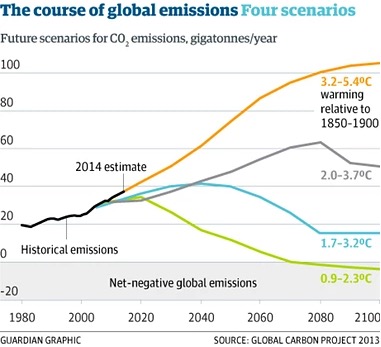
The Intergovernmental Panel on Climate Change foresees an average increasement of the global temperature between 1,5 and 6 degrees until 2100. The global catastrophe seems not to be avoiable. The Aosis demands that the emission levels of carbon dioxide get reduced 20 % compared to 1990. Germany and Great Britain suggest a reduction of 10 % until 2005 and of 15 % until 2020. Dutch scientists point out even a reduction between 60 % and 70 %.
Once again from reliable sources
At the end of 2003, one of the hottest years in the history of man, the Oceonographic Institute "Woods Hole" has published a research which reports that the salinity of the polar seas is decreasing continually, while the salinity of the tropical seas is increasing; besides they have registrated radical changes of the oceanic running waters that regulate the stability of the world's climate, while extremely strange and violent metereological effects have been registrated more or less everywhere.
These scientists considerate the actual change of the circulation of the Gulf Stream in the North Atlantic the most worrying oceanic change ever measured since the invention of instruments for their survey.
The disappearance of the Gulf Stream could turn into the worst catastrophe ever seen in the history: it wouldn' t save any being on the whole surface of earth; all would have been involved and there wouldn´t be any safe zone. The affected area would be very large and the damages would persist until the reappearance of the Stream. We could remain caught in this climatic trap for thousands of years with the nearly total reduction of the Earth to give living - space for all beings.
The continuos changes are part of the normal climatical developement of the earth: there have been a lot in the history and in the last 3 millions years they have followed regular cycles. The emergence of the terrestrial isthmus in the centre of America, 2, 8 millions of years ago, modified the fondamental structure of the oceanic running waters and this fact, united with changes of the emissions of sun energy and a light change of the terrestrial orbital, stabilized more or less our climate.
After that there have been a lots of Ice Ages, each one of a duration of about 100.000 years, spaced by interglacial periods of 10.000 until 15.000 years; and the whole human history has been developped in the last third of the most recent Ice Age.
The next Ice Age will begin when the oceanic running waters will stop to bring warm water in the polar regions and when the snow will not smell any more for several summer times. This will provoke the increase of the superficial reflexion of the planet to the point that will be consented the formation of glaciers of very large extensions. But before this can come true, there will be a bottom of heat, followed by a violent change of the meteorological conditions. We nearly reached this increase of temperature in the summer 2003, when the temperatures in Europe reached unprecedented levels. Even in the Arctic the thermometer was reading temperatures which have been extremely higher than the normal temperatures. The consequence of the extreme increasing of the sea temperature would have been the formation of an apocaliptical cyclonic event that would have triggered of this process of climatical change with unimaginable consequences for the survival of all beings of our planet.
Besides the scientists are convinced that there wouldn´t have been any continent, city, village or person that would come out of it unharmed and the worst aspect is that this change could happen at any moment.
The man has not the possibility to intervene on the cycles that are alternating Ice Ages and interglacial periods, but a good project regolated by the Constitutional World Charta in order to protect the Ecological Democracy can minimize the impacts of climatical changes on our civility and maybe even postpone or reduce the violence of the devastations.
But unfortunately the governments of several states are not able to find an agreement for their common environmental politics. If the statesmen committed themselves more to ratify the Protocol of Kyoto, we could reduce the emissions of CO2, particularly in the industrialized countries where it is more easy to control the levels of pollution.
The challenge regards everybody, industries, governments and every single consumer of energy: if this decision was accepted by only 20% of the European, American, Canadian, Japones and now even Cinese (<= for the moment the megaconsumers of energy) citizens, the worldwide levels of the CO2 emission could decrease. So the human factor could have a minimal impact on the global temperature increase, by slowing down in a considerable way the final devastations.
But, on the contrary, there is a lack of engagement by the governments' leaders, most of all by the United States of America which have adopted a position of dangerous and aggressive indifference towards to the climatic changes, and all that in a moment in which milliards of human beings are threatened. All the people who ignore deliberately the danger will not only be responsible for the greatest catastrophe that could become true at any moment, but they will even be responsible for the end of the modern civilization, the best, the most free and perhaps the most evoluted that mankind has ever known."
The 26th of December 2003: an apolyptical earth - and a seaquake affects the Southern Asia killing life in the affected territories.
The dimensions of this event are so strong that the isle of Sumatra has been moved more than 30 meters and that are caused even variations in the terrestrial axis.
If there is a connection between this event and the continous climatic variations? It´s too early to say it, but it' s not too early to think
it!
Finally something is happening. Consciousness and conscience are growing steadily
The year 2005 and all the catostrophes and thousands of victims, confirm once more the dramatic worsening of the climate change, which is conditioning in an exponential way our own existence and that one of our planet. The year 2005 has unfortunately a record of tropical hurricane stormes, like the hurricane Catherine, which has destroyed nearly whole New Orleans, and which has created extreme rainfalls in whole Europe. The cry of help of the climatologists is always more pressing and the attention of the scientists is concentrated always more on this argument.
A new discipline is born: Geo - engeneer or Eath or Climate engeneer. The target of this discipline is to find solutions - some of which sound very often like taken from a Science Fiction Stories - able to slow down as fast as possible the warm up of the Earth to gain time and to replace the polluting energy with the non polluting, like for example the Brasilian Airline, which has replaced the kerosine with ethanol. But it doesn' t need only the will, to realize the new projects, but even time, a lots of time.
In order to lower the temperatures, the physicist Lowell Wood wants to construct an huge umbrella in the space, formed by reflecting balls, which are flying in the stratosphere or made by reflecting metallic platforms.
They have to get fixed in an adequate orbital and so they can reduce the forth of the sunrays. The sunlight, filtered in this way, has nearly the same power as the sunlight on a cloudy day.
Or you can create clouds: they increase the albedo, the quantity of light, which the earth reflects into the space. The project of Stephen Salter, Geo - engineer at the University of Edinbourgh, is to create swimming stages which should rotate turbines with wind energy. The windenergy pulverizes the seawater and this condensation favours the formation of clouds.
These clouds would reduce the sunrays and decrease the average temperatures of the Earth. But what could be the consequences of all these projects on the climatical changes in a lot of parts of this Earth? Some simulators are just active, in order to examine the lateral effects of these projects.
Other projects want to exstinguish first of all the climate enemy no. 1: the CO2. The oceonographer John Martin has observed that iron is favours the increase of microscopic little algas which absorb CO2 for their metabolism. That' s why the enriching of the World seas with iron could lead to the absorption of a lots of iron by these algas. Due to scientifical studies one kg of iron is able to absorb 100.000 kg of CO2. But if these algas would get to much, an huge intervention could affect the biological balance, formed in millions of years.
To plant trees may function for some regions, but unfortunately not for the whole world. If we remind us, that only one burning tree, creates the same quantity of CO2, which he has absorbed during its whole existence, we will notice how palliative this solution is.
Klaus Lackner, physicist at the Center for Earth - engineers at the Columbia University, proposes to filter the CO2 directly out of the air, with filters enriched by hydroxides of iodine or calcium, famous for their capacity to absorb the gas. An huge filter, as large as a television, could absorve about 25 tonnes of gas. But if you want to absorb 30 milliards of tonnes of CO2, which is the quantity, that the mankind produces in only one year, how many filters would have to be realized? It would be a Cyclopean enterprise.
Roberto Bencini, geologist of the Istituto Nazionale for Geologia and Vulcanologia, explains that it would be easier to catch the CO2 in the underground, like they do just in different regions in order to get nature gas and in some thermoelectric centrals where the superfluous CO2 gets absorbed and, compressed, injected into a deep water table.
Another plant in Canada is injecting every day 5000 tonnes of CO2 in an oilfield about 1,6 km of depth with the double vantage to better even the exploitation of petrol. The studies have shown that in these fields the CO2 seals itself with the silicates, and so it gets transformed into minerals, which refill the porosity of the rocks. It' s estimated that 99, 999 % of CO2 will remain down there about 5000 years.
The CO2 could even get locked under the sea, where it would remain because of the pressure.
Extreme projects, which may seem on the first sight futuristic, but which express of lots of initiative and fantasy, to repare the damages, which have anthropical components and which want to recreate balance.
Damages, which - if we can believe all the scientists - can' t be repared never again. And so the scientist foresee the worst: the exstinction of all living forms in a short time.
Before the new technologies can be used, it' s absolutely important to stabilize new limits for the CO2 by the Protocol of Kyoto, because the actual limits aren' t sufficient for the battle against the climate effects, and that every nation has to respect these limits, above all the United States of America and China, which are living an enorm economic increase, at the cost of extreme consequences for the pollution of the
environment.
The warm up of the Earth is happening every day in front of our eyes, and every day we hear about these problems in the mass media. At the end there are the scientists who examinate the climate and the destructing effects, and they notice, that these phenomenons have been increased enormally in the last 30 years. It's absolutely time that the cultural conscience grows, and it has to grow fastly, because it' s absolutely necessary for a radical change, and we, if we don' t want to get punished by the death penalty, have to partecipate.
Even in 2007 the list of the ambient catastrophes is longer than a year ago and it continues to seem the most normal thing of the world: we’re doing nothing and we’re living in a passive and relaxed way, but we’re always hoping to be never hit.
If we name once again all the catastrophes that really happened this year, we would have to repeat the same things we said before, with the only exception to describe new dramatic sceneries.
But ….. the conscience and the knowledge of all the problems and risks that have to do with the climatic change get always more important in the public life.
And so we suspect that al the real motivations are in the Shock Economy - or better: in the capitalism of the catastrophes.
In November 2007 we inform about the following ultimate in a report of the UNO
"Either we chance all our lifestyle or there will be an ambient catastrophe because of the …!"
The secretary of the UNO, Ban Ki-moon, supported by the most important scientists in this field, announced, after a very deep analysis of the rain forest and the Antarctic, that the consequences of the warming-up of the climate can be considered like an "horror film". At Valencia in Spain, where the IPCC (Intergovernmental Panel On Climate Change) met, has been declared that there’s no time anymore.
The IPCC is the scientific committee that 1988 has been formed by different organisms of the United Nations, the WMO (World Meteorological Organization) and the UNEP (United Nations Environment Programme) with the object to observe the warming-up of the earth in the whole world. The continuously published reports of the IPCC base on the worldwide conventions, among other things the frame conventions of the United Nations about Climate Change and the protocol of Kyoto that realizes them.
In this year the American Ex-Vice-President Al Gore has won the Nobel Price for his efforts in developing the public awareness of the environment and the risks of climate change. The numbers are always the same, just published in the 4th rapport: the sea level has grown in the last 100 years about 1 meter and unfortunately it continues to grow.
In the future the following consequences because of the continuous melting of the icebergs will probably hit most of all big cities in the Asian area; in the meanwhile there will be without water more than 250 Mio of persons until the year 2020 in Africa.
A third of all plants and animals will risk to disappear on the whole world.
In the whole world there will be extreme events and catastrophes which will change life on the whole world.
This report arrives a few days after the conference of Bali has to control the Protocol of Kyoto that has just been surpassed by all the dramatic events.
For the scientists of the UNO there is no space for discussions and doubt.
We have to act immediately and drastically. Within 2012 (and only 8 years remain) we have to stop the increasing of the pollutants and then reduce them immediately, otherwise there will be irrevocable. In this dramatic vision we can affirm - for heaven’s sake - that people take more and more notice of the importance to finally change something. Even China and India, two states that continue to grow econamically, seem to react more sensible on the control of the polluting effects. In the United States Al Gore has hurt the American economy and production with his raising up of the public ignorance; but they begun immediately with the opening of a new market for eco-products and the destruction of the polluting ones.
This strategy that wants to lead to a change of the mind could enrich all those who are just rich and powerful.
Even if the richness doesn’t fall like rain on our earth, so there will grow the hope that the future generations will survive and that they will enjoy all the fruits and all the beauty of our earth - just like our forefathers did millions of years ago.
Bali moderate optimism.
The conference of Bali that united representatives of the whole world in order to redefine the limits of greenhouse gas in view of new catastrophically facts, was once again without any concrete solutions.
After 13 days of top secret negotiations the "roadmap" of Bali has been accepted with the common consensus of envoys of 190 present countries. But the United States expressed their intention to prepare a new proposal, though they’ re still contrary to the fixation of the obligatory greenhouse gas emissions. It provides a plan, in order to treat a new convention about climate change that should replace the protocol of Kyoto in a more ambitious way.
“Kyoto 2” that should be treated within the next 2 years, will be firmed in 2009 at Kopenhagen. The new treaty will get in vigour at the end of 2012.
The treatment that will be published by the new member partners, should be obligatory for all countries from 2013 on. And we dont't have to forget Australia, that finally firmed the Kyoto protocol during the conference of Bali. And at the end even Italy which produces much more greenhouse gases than the fixed limits, and so they’re at the end of all countries in battle with climate
change.
2008, year of the "20-20-20"
Green light by the College of Commissioners of the European Commission's plan to combat climate change. This is a package of legislative proposals on which the EU council had already found the cartel in March of last year, setting the objectives outlined by the abbreviation "20-20-20". That is the achievement of 20 percent of energy production from renewable sources, improvement of 20 percent efficiency and a cut of 20 percent in emissions of carbon dioxide. Targets to be reached before the date of 2020. In the case of Italy, will cut 13% of C02 emissions in areas not included in emissions trading scheme (ETS) and will increase by 17% energy consumption from renewable sources by 2020 compared to 2005 levels . Now the commissioners have better defined those goals, divided into five different standards to which is added a document on state aid. As well as before the European Parliament, the document must pass the examination of Member States. Brussels hopes to approve the measures by 2008 but Mr Barroso has said to expect "difficult negotiations". An anticipation of the hardness of the clash that you consume in Europe were unable to observe recently during the debate of legislation to reduce emissions of CO2 to be imposed on car manufacturers in the production of new cars. The package to combat climate change Union, in addition to the objectives of 20-20-20 also provides for an increase in use of biofuels, 10 x percent in the transport sector.
Even in 2008 analyzes the relationship arising from the three 'working group' of Gieco, (The Gieco brings together the best researchers worldwide and is an intergovernmental group of experts on climate, born in 1988 at the initiative of the World Meteorological Organization and United Nations Environment and was in particular to the Kyoto Protocol), the meeting of world experts on climate change stipulates that the climate catastrophe is around the corner and threatens to close our survival. The new report says that Gieco of the greenhouse effect exists and that it is accelerating. Over the past 10 years, both concentrations of CO2 in the atmosphere and the temperatures have risen much faster than in the past. According to figures that were circulating before the last meeting (November 2007), in 2100 the experts advocating a doubling of concentrations of CO2 (550 parts per million) compared it to pre-industrial period and at the same time, temperatures could rise 2 to 4.5 degrees. A huge leap when one considers that since the last ice age, occurred 10,000 years ago, the current average temperature has risen by 5 degrees. Unfortunately, these increases in emissions ago reflected a diminished capacity to absorb CO2 from oceans and vegetation. While 50 years ago for every tonne of CO2 emitted these "reservoirs" absorbs 600 kg, only 550 kg are removed from the atmosphere, with a trend to a further decline. The specialists in 113 countries gathered in Paris to 90% estimate the probability of a liability in human overheat climate. The Earth will respond to a catastrophic warming during this and the next century. The computer simulations of Gieco have predicted a global warming of 1 ° F every 10 years and 5-6 ° C (10-11 ° F) by 2100, which would cause a global catastrophe whose effects on human life, the habitat natural, energy, water and food. All this is based on the assumption that global warming is caused by CO2 in the atmosphere and that this growth will accelerate. The largest increase in emissions occurred in developing countries, especially China and India, while in industrialized countries, adhering to the Kyoto Protocol emissions have increased slowly. China has overtaken the United States and became the country largest emitter of CO2 in the world, while India will soon exceed Russia.
Catastrophic predictions for the future: millions of people in Africa to suffer water shortages by 2020, about one third of plant and animal species risk extinction, and climate change will have negative effects on the health of millions. The most surprising conclusion of the report is that the poorest regions of the world that suffer most from the effects of warming of the globe. According to the report approved by some 400 delegates at the Gieco, representatives from over 120 nations and then delivered to policy makers, any change of lifestyle and behavior may contribute to the reduction of emissions (greenhouse gases) in all sectors. The cost reduction can be accessed and the need to act quickly is, in the opinion of the experts, not postponed. The Europeans want the United States and emerging countries (China, India, etc.), Which does not participate in the Kyoto Protocol, also undertake to reduce their emissions of greenhouse gases under this new agreement, what currently refuse. Use chopsticks to the Kyoto Protocol and a future not encouraging for rivers and seas of Italy and southern Europe. Despite the imminent return to the presidency in the White House, the U.S. did not seem inclined to accede to the Protocol of Kyoto. This is what they have reported the two advisors of the two candidates for the presidency, Mc Cain and Obama, a Corrado Clini, director general of the Italian Ministry of Environment in a conference with the theme "Acting in time on energy policy" held at the University of Harvard.
Obama, however, after his election, with a VCR to "Governors' Global Climate Summit" convened by Republican Governor Arnold Schwarzenegger in Beverly Hills, California, announced that the U.S. wants to take a leadership role on domestic and international problem Together with a dependence on foreign oil, the economy weakens and threatens security. It will begin by establishing a system of roof and trade in emissions of greenhouse gases (the system of the Kyoto Protocol) and annual targets for reducing the U.S. which will lead to the same 1990 levels by 2020 and a further reduction of '80% By 2050. Will be invested 15 billion dollars annually to renewable energy. It 'clear that Obama policy on climate change represents the real opportunity. We shall see!
Meanwhile, the Arctic Ocean is losing ice cap with an advance of approximately 30 years compared with IPCC predictions. Now it is expected that during the summer ice could disappear entirely between 2013 and 2040, a fact that has never occurred for more than a million years now. Marine ecosystems in the North Sea and Baltic Sea are now exposed to milder temperatures ever recorded since measurements began, resulting in unpredictable on the ecosystem, while the Mediterranean suffer droughts in the long term with increasing frequency.
Make the journey from North Cape to come close to Bering, on the occasion of 90th anniversary of Passage north-east, the first company from exploration carried out for Norwegian Roald Amundsen. is the goal that has set the shipment "BEYOND, Beyond The Edge 2008", which came from Milan on November 30 2008, that Petter Johannesen, granddaughter of Roald Amundsen and leader of the expedition, ripercorrerà stages of the Switching to North-East for the first time by mechanical means (jeeps), from North Cape to the Strait of Bering, challenging the extreme weather conditions of winter Siberian. The trip itself will end at the close of Bering in March 2009. Dispatch participate in total 45 people including scientists, doctors, journalists, photographers, video operators, drivers, mechanics, who will take turns every 30 days provided in 12 stages. The shipment was born in a spirit of adventure, but it also raises targets associated with the development of knowledge, scientific research, acquisition of environmental data through the comparison between the reality of early last century (the one told by the diaries of Amundsen) With the present one. The collection and comparison of scientific data will be of great importance to the IPCC.
The glaciers in the Swiss Alps continue to decrease, resulting in drastic reductions in the production of hydropower. Globally, it is expected that rising sea levels will be equal to twice the maximum dell'IPCC forecast, which estimated an increase of 0.59 meters by the end of the century, with serious risks for large coastal areas. The increase in temperatures has already resulted in a reduction in crops of wheat, corn and barley throughout the world. According to the latest studies, in the British Isles and the North Sea cyclones extreme increase in number and intensity, leading to an increase in wind speed and damage associated with storms over western and central Europe. The level of ground-level ozone, which acts as a pollutant, will be similar to that recorded during the heatwave of 2003, with further increases in England, Belgium, Germany and France. And even the maximum annual rainfall will increase in most of Europe, with consequent risk of flooding and economic damage.
E 'became clear that climate change is already having an impact greater than most scientists had anticipated. It is therefore vital that the international response to cutting emissions and adaptation is faster and more ambitious. The last IPCC report showed that the reasons for concern are now stronger and this should lead Europe to commit themselves because the increase in global temperature is well below 2 ° C compared to the pre-industrial. But even keeping the 2 ° C, according to the IPCC is necessary that developed countries reduce emissions by 25 to 40% by 2020 compared to 1990, while a 20% reduction would be insufficient. If the European Union will be regarded as a decisive leader in the UN summit in Copenhagen in 2009, and if he wants to contribute to the emergence of a strong global agreement to tackle climate change after 2012, should not continue to shirk their responsibilities and commit for a real reduction in emissions.
The agreement on climate and energy package, despite requests for tolerances and adjustments to the economic conditions in free fall in the world, was approved unanimously by the EU. The agreement reached on 12.12.2008 by the EU summit is a "historic" for Nicolas Sarkozy and reason for great optimism for Al Gore, both champions of the need for Europe to pay for pulling the world towards combating climate change more challenging and
effective.
09.07.2009 at
L'Aquila - G14 "..... we govern or events or events govern us
...."!
This is the opening of the U.S. to the world that President Obama gave in
Summit when he addressed the issue of climate upheaval.
Emerging countries have shown a willingness to contribute to solutions to
problems, India and China take time even with timide openings.
Historic agreement? Planned for 2050 killing of '80% of the pollutants.
By 2015, doubling the investment for clean energy.
Meeting in Copenhagen
for the turning point?
Regarding
the appointment of Copenhagen on 7-18 December 2009, Simone
Jacca tells us:
"
Environment, last call: Copenhagen, 7-18 december
The conference on climate in Denmark:
the mistakes of yesterday and today for not making a mistake
months ago domaniQualche Intelligent Life magazine, supplement to
The Economist, has put an interesting question that has sparked an
unusual debate among scientists, professors, politicians and
journalists around the world. The question is the most important
year in history: a way to think about what we are, who we are,
where we came from and especially where we go. The experts
consulted by the magazine of course have not reached an agreement.
And so I have flown all kinds of dates: 44 BC to the death of
Julius Caesar, 1492, for the discovery of America, 1945, by the
end of World War II and Nazism, 1989, for end of communism, or
year zero for the birth of Jesus
Important years, central to the history of events and of humanity.
But in the end the authors have spoken of the survey and concluded
provocatively (but not much) that the year will be the largest in
history in 2009: "If a December summit in Copenhagen on
climate change the powers of the earth does not put agree, we will
have wasted the last chance to save the planet and thus ourselves.
"
What we did
"In a historic moment this insignificant human mammal has
subjected the other species and upset nature." Giorgio
Ruffolo, in his essay "Capitalism has ever counted (Einaudi,
necklace ostriches, 2008, pp. 295, € 16.00), is almost romantic
in the telling of this century-Titanic, to name the famous disk
Francesco De Gregori, that in the "far" 1982 was clearly
the past one hundred years compared to a ship crowds, strong,
committed suicide.
A ship led by a captain, the man of the twentieth century, there,
sitting on deck, smoking his pipe, you can enjoy the exploits of
his creation. Meanwhile, as we said Ruffolo, consumed in a short
time and once and for all the endless masses of fossil fuels
accumulated for billions of years into the womb of the earth,
primeval forests and oceans plankton deposited in the form of coal
and oil. Buried under sand storms million hectares of virgin lands,
destroying the fertility and desertifying continents. Enslaved
fish, birds and land animals have gone well beyond the biblical
prescription. Contaminate groundwater introducing unusual poisons.
Liberata huge masses of methane from manure concentrations of
giant farms. Destroyed much of the billion and a half hectares of
tropical forests. Spread in soil, water and air tens of millions
of chemical pollutants. Causing the massacre of other plant and
animal species, leading to a dramatic decline in biodiversity,
soared in recent decades by the rate of extinction of one species
every four years to about one extinction per year.
Everything in this world, this moment in history, "this night
electric and fast, / in this cross of the twentieth century / the
future is a cannonball on / and we are almost reaching"
(Francesco De Gregori, Muscles captain, from Titanic, 1982).
What we run into
But despite everything, there is something worse, something more
serious, more urgent, something worth bringing together all the
heads of government of the world and make decisions compelling and
courageous: climate change.
And yes, because the previous list of terrible and perhaps
irreversible disasters is very little compared to the gradual rise
in temperature that we live and which we encounter: we speak of a
global mean rise of 5,5-7,1 degrees Centigrade by 2100. Six
degrees, so it seems almost silly in front of the excursions of
10-15 degrees to which we are accustomed in the months of April or
September-October. But, in reality, you're grades are far too many,
and have consequences that go beyond our physical sensations.
For example: a fifth of all animal species threatened with
extinction, 1-2 billion people without water, melting of Himalayan
glaciers and the whole of Greenland, and at the end of the century,
the Amazon, home to half the biodiversity of the planet, turned
into an arid savanna.
And if this were not enough, National Geographic Channel has
presented a map of the different possible scenarios in the next
hundred years for each degree of increase in global temperature.
• + 1 position: no more corn on the world market;
• + 2 degrees: the destruction of coral reefs;
• + 3 degrees continuous cycles of drought and sand storms to
Central Europe;
• + 4 degrees: the disappearance of Venice, New York and all
major coastal cities and the North of Canada would become the most
fertile area of the planet;
• + 5 degrees instead of the temperate zone of the two
hemispheres would create two huge areas uninhabitable;
• + 6 degrees: the planet would return to the environmental
conditions of the Cretaceous period.
Who we trust?
So Copenhagen, 17 years after Rio and 12 years after Kyoto.
Between 7 and 9 December 2009 again, according to many the last
chance to change something.
The Danish table is divided in two: on the one hand we have the
green Obama, who meanwhile has not yet ratified the return of the
United States in the Kyoto Protocol, after the dramatic retreat in
2001 with the advent of Bush. With him a number of governments
seem prepared to take intransigent positions: English Brown, the
newly elected democratic prime minister of Japan Yukio Hatoyama
and few others.
On the opposite side the large group of developing countries
(China, India, Brazil and Indonesia) that claim the ability to
adapt to the Western world and to achieve that wealth that we have
overwhelmingly achieved in the sixties. To these must be united
various Berlusconi, Putin and Sarkozy, who, using a euphemism, are
not very sensitive to environmental issues.
It's all about choice. Between money and life, between the present
and future, between war and peace, between collaboration and
oppression, between a new pact, another Kyoto, with serious
commitments binding, executives and a new reference, leaving the
sensitivity and the good will of individual countries with the
daunting task of protecting us from an ominous future. And
sensitivity and will, as we have seen, there is little fun!
Especially in our part ...
What hope
The expectations, therefore, are transformed into a single,
tenuous hope. Weak, but alive. The hope that history has taught us
not to blindly and obsessively look only at present but to turn
increasingly look to the future, aware that every achievement,
every peak conquered, it immediately loses meaning and
significance we can not guarantee even those who come after us.
This hope, however, must be preceded and accompanied by a
statement of awareness on the part of all, that our lifestyle is
clearly not acceptable and sustainable and that any waiver is
necessary.
But this is only possible when we realize that the Titanic is
unsinkable and that the sea before us is difficult and treacherous,
and that, given the mountain of ice must act more responsibly and
humbly of the fanatic Captain singing De Gregori: "Young man,
I do not see anything. / There is only a little 'foggy announcing
the sun. / Let's go quietly. "
Image: Perito Moreno glacier in Argentina. Photo courtesy of
Massimo Musetta (maxim970@tiscali.it) and inserted in Chile and
Bolivia. Travelogue January 2003 (copyright 2003).
09
dicembre 2009 "Please save the world ""
Thus
began the conference on the climate. The
opening ceremony begins with a video: some children who represent the
future, showed a scenario that projects us in the Apocalypse. Certainly
a provocation, but also advocated, although this summit did not
materialize appropriate action by the Heads of State present.
This
is an event of historic significance. There
are more than 300 journalists. Just
a few newspapers worldwide, including Republic, The Times, The Guardian,
Le Monde, El Pais and Toronto Star is a party appeals expressed in a
common editorial, "Unless we unite to take decisive action, climate
change will devastate the our
planet and with it our prosperity and our security, "said the 56
newspapers that say they have decided this unprecedented step, to speak
with one voice, to ask world leaders to" make the right decision
"to Copenhagen. "The
political representatives meeting in Copenhagen have the opportunity to
decide what will be the view of the history of this generation, one that
understands the threat and that it has fallen short with its shares, or a
so stupid she had seen at catastrophe
and not doing anything to prevent it. We implore you to do the right thing.
".
The situation today: click on
The
stall is the only reality that emerges from Copenhagen. The
U.S. Senate has gagged President Obama not having spoken about the
agreement before the summit. The
U.S. role is undefined, such as China and India who claim to be willing to
walk the path of clean energy production but require strong fianza in
support of sustainable development. The
availability of Europe to the capital was regarded as "peanuts"
compared to 500 billion € per year predictable, but unthinkable for the
economies of most advanced countries, otherwise its economic collapse. Scientists
have now studied the research on the phenomena taking place, are realizing
the human impact on climate upheaval: their cry of alarm contrasts,
however, with the indispensable requirements of macroeconomics, especially
at this moment in history already shocked
by the economic crisis in westernized countries that still is present. Poor
countries will suffer the most damage! Large
corporations have always refused to conform to the Kyoto agreements to
continue to exploit the resources at the expense of everyone: unimaginable
that they can do it today. Global
emissions have increased by 40% from 97 to today, despite the tremendous
efforts made by Europe to restrict the pollutants, but insignificant
increases in emissions compared to Chinese, Indian and U.S. reaching
nearly 50% of global emissions and require
immediate remedial action to environmentally sustainable development that
would slow their growth. The
macroeconomics imprison the Earth and gag available to the Heads of State
Summit, but deaf to ratify the treaties. Surprise
move: the U.S. Secretary of State Hillary Clinton said that the U.S. will
make available by 2020, their participation in the 100 billion dollars to
underdeveloped countries and are "ready to take the necessary steps
to achieve a complete
and operational agreement on climate and there must be doubts about the
willingness of the U.S. to achieve success in Copenhagen. U.S.
President Barack Obama has arrived in Copenhagen to participate with
several other Heads of State and Government Summit on climate. He
told a photographer from Agence France-Presse on the scene. . From
a press bend of 18/12/2009 0re 10.36 "The
discussions held during the night in Copenhagen between thirty heads of
State and Government at the initiative of the EU ', were" fruitful
and constructive "but are" still far from a result. " It
'as stated by the Danish Prime Minister Rasmussen Lars Loekke chairman of
the Conference on climate. This
morning the leaders of this group have already resumed their work, while
in Copenhagen it's U.S. President Barak Obama. Many
hours of work at night to search hard for an agreement on measures to be
taken to curb global warming. Negotiations
to the death here in Copenhagen where the UN summit on climate is truly
arrive in the pipeline with the arrival of leaders.
Pending
the entry into the scene of Barack Obama, scheduled for this morning, the
heads of state and government have rolled up their sleeves and began to
negotiate seriously, even through a swirl of bilateral talks which had its
climax today with the meetings
that the American president will have - here in Copenhagen - with Chinese
Premier Wen Jiabao, with Russian President Dmitri Medvedev and Brazilian
Lula Ignacio da Silva. Also
convened an extra-summit night in a race against time, though many think
it will be necessary to extend the meeting another day. In
late-night announcement of the Danish prime minister, Lars Rasmussen, the
meeting is bearing fruit and that it is prepared a new draft agreement to
be presented this morning at eight leaders. There
would be efforts to reduce emissions of polluting gases to keep the
temperature increase below two degrees and the objective of long term
finance in developing countries with 100 billion dollars a year by 2020. The
report, according to Reuters, sources who participated in the talks and
who have asked to remain anonymous. "It
'been a useful and fruitful meeting," said Rasmussen, confirming that
the Sherpas will be working all night to make "further
progress". The
breakthrough that has given breath to the negotiations, but once again
"made in USA" even though the Europeans have pushed hard for a
top result. Obama
was preceded by surprise by the Secretary of State Hillary Clinton
yesterday morning has spread generously confidence accompanying statements
of good will with a strong opening: the United States agreed to
participate in fund aid for developing countries 100
billion dollars by 2020. He
stands the unknown China yesterday showed an excess of tactics: first he
threw into a panic by the negotiators of the United Nations know that a
deal was "impossible", and then, through a statement by Chinese
Premier Wen Jiabao, called for a Agreement
balanced, just and reasonable. " Meanwhile,
perhaps not surprisingly, is a study of shock leaked UN says clearly that
if you sign an agreement under current conditions the planet would be at
risk disaster. According
to this a confidential document, bids for reducing CO2 emissions on the
negotiating table, would lead to an increase in average global
temperatures three degrees from the target of 2 degrees. Translated:
170 million more people would suffer for the floods and 550 million more
risk from hunger. " Reading
between the lines tells us that each carries its strategies and a
hypothetical agreement should result safeguarding everyone's faces.
MINI
climate agreement. An
agreement with no figures on CO2 reduction, with the recognition of the
scientific evidence establishing a maximum 2 degrees increase in
temperature, and with certainty only on the funds, $ 30 billion in the
period 2010-2012 and 100 billion dollars l 'year
by 2020. A
win is China, which had refused to 2050 global emissions target of 50% for
all countries. The
EU accepts, albeit timid, and French President, Nicolas Sarkozy expressed
"disappointment" for the lack of reference to cutting global
emissions, and announces a new conference in Bonn within 6 months. But
the night on the document ignite tempers. In
the plenary session of the Conference, when all seemed a foregone
conclusion, apart from the barrage of Latin countries contesting the
procedure that led to the text. A
captain rebellion and once again the symbol of the Conference, the small
archipelago in the Pacific, Tuvalu, which threatens to sink under the
pressure of climate change. Prime
Minister Apisai Ielemia makes it clear that the future of his small state
"is not for sale" and cites the 30 denier of Judah. The
same line wavelengths involved burst Venezuela, Cuba, Costa Rica, Bolivia.
Writes
- Stefano Polli -- "They
called agreement but it seems something very like a failure. The
magic of Barack Obama will not work in Copenhagen, and after eleven days
of grueling negotiations and irritating the mountain summit on the climate
thousands of politicians, experts and technicians gives birth to a mouse 'small
agreement. An
agreement, if so we want to call, downward, harvest the wire in a
negotiation conducted without conviction and without courage and carried
forward by the great of this world - except Europe - just watching the
national interest and ignoring the chasm that sees clearly the
future of a fragile world and exposed to the consequences of pollution and
'greenhouse effect. The
vetoes opposing visions of the great men of selfish world - the U.S. and
especially China - have forced the Copenhagen conference to yield an
agreement without breathing and without a vision that can give perspective
to solve climate problems, and that will force the community international
new appointments in the short term, in the coming months. Missing
numbers in this agreement and words alone can not suffice. Just
as not sufficient on their own goals of limiting warming to 2 degrees and
the bottom 30 billion dollars in immediate resources (2010-2012) and 100
billion dollars a year by 2020. Where
are the national commitments to reduce CO2? And
Where is the reference for the overall reduction of 50% to 2050? The
figures must be made within the first February 2010 and the international
community will, as told French President Sarkozy, to meet again in Bonn in
six months for a rematch. It
'an agreement is not binding, as explained by Obama, who has acknowledged
that it is an' understanding 'is not enough. Beyond.
It
is a 'cartel splitting large: on the one hand the U.S. who have reached
the hours of frantic consultations an agreement with India, China and
South Africa and other Europe which, while Obama was already in flight to
return to the U.S. had
gathered to find an effective way to express his frustration. U.S.
and China - the biggest polluters of the world - have remained firm on
their positions, insufficient to resolve the major problems of the global
economy. L
'Europe has sadly confirmed that fails to affect the international scene
in front of the growing power of the new Global Director, the
Washington-Beijing G2. Inevitably
come back to mind the commitment, strength and determination with which
the great of the world have responded, only a few months ago, the recent
financial crisis, the money spent and the timeliness of their efforts. None
of this has seen these days in Copenhagen. And
in this simple comparison is the clearest image of the failure of
Copenhagen. "G77: The group that collects the poorest countries and
the developing protest. The
agreement "is the worst in history" of the UN summit. "This
alleged agreement is a total failure, is also a step backwards compared to
the Kyoto Protocol." E
'harsh response from the Director General of Greenpeace, the French Pascal
Husting, the first reading of the final text of Copenhagen. "If
a head of state will try to say that this agreement is a success - added
Husting - will win the Palme d'Or for the communication of the most
misleading. In
the draft circulated disappear binding commitments and collective, in
their place a list of the availability of every single state. "There
is only one point - he continued the head of Greenpeace - which speaks of
mandatory agreements. The Kyoto Protocol was insufficient, but at least it
was binding. This text is proof that national self-interest prevails and
is also the
weaker version circulated among those present. "The
scientific data are uncertain and can not change - concluded Husting - but
if after all these years later, this means that the policy has failed.
Then there are only two possibilities: either we change the policy or
change the politicians."
2010 - Environmental
disaster
Thanks British Petroleum!
The only real answer is that you
deserve the world markets refuse your products and...forever
The
weather continues to show intense anomalies in the world. Decreases in
frost days with minimum temperature less than or equal to 0 ° C, while
increasing the tropical nights and summer days. There is also increased
surface temperature of the oceans: the North Atlantic has maintained an
intensity of between +1 and +2 ° C, the same as in 2008, while in the
tropical Pacific, the anomaly is slightly positive since June . In terms
of the peak drought has occurred in Mexico and East-Central Africa where
drought has caused a great famine for 23 million people. Abnormalities of
equal intensity have also affected the Middle East, Eastern Europe, the
northern tip of Asia, Australia and South-East Asia. The intense thermal
anomalies that affected the southern regions, has paid a reduced extent of
Arctic ice cover (third lowest after 2007 and 2006).
In Russia, for example, the peak was recorded in February with average
monthly temperatures from 3 to 6 ° C below the 1961-1990 average. Heavy
snowfall (the most abundant of the last 55 years) have affected the
northeast of China, while the record of snow cover has been achieved in
North America.
As for the rains, particularly intense rainfall have invested during the
month of June, Central Europe and China, where they destroyed numerous
homes and drastically reduced harvests.
Global warming melts "the mountain of the Ark" in the last 30
years the glaciers of Mount Ararat in eastern Turkey, would be reduced by
about one third of their surface. The alarm was launched by the geologist
Akif Mehmet Sarikaya, which preceded the publication of the results of a
study on the ice of the mountain on which, according to legend, would have
stalled the ark of Noah after the Flood.
The exceptional heat wave that has stifled Russia, droughts and fires that
have killed dozens of people destroyed thousands of hectares of wheat
fields are all signs that climate change causes extreme weather conditions
worldwide. Said Alexander Bedritsky, meteorological adviser to the Kremlin,
who cited other disasters that may be linked to global warming as the
terrible floods in Pakistan, the most serious in the historical period,
wave of heat in France in 2003 that killed 15,000 people. Taken together,
"these are signs of global warming," said Bedritsky, who is also
president of the World Meteorological Organization, in a press conference.
Moscow is traditionally very cautious on climate change in a country whose
economy depends heavily on exports of oil and gas. The heat wave in
Russia, the strongest in 130 years of temperature records, has raised
thousands of fires, especially west of the country, burying Moscow under a
pall of acrid smoke for a week, a phenomenon that has doubled mortality in
the city. Drought and fires have cost to Russia is a third of grain crops
and the government has decided to block the export of wheat until the end
of year, causing price hikes on international markets.
Might separate the Crimea from Ukraine. Not so much politically as
physically. The possibility that in the near future, the peninsula on the
Black Sea is no longer attached to the mainland are high. At least
according to what he said Nicolai Kulbida, head of the Center hydrometric
of Ukraine. Because of global warming and rising sea levels would become
an island in the Crimea. A rise of about 50 cm of the level of the Black
Sea lead to the division of the peninsula from the mainland.
It therefore seems increasingly clear that the end face of the Kyoto
Protocol two years after its expiry. The visions of those who remain
strongly opposed (China and most developing countries) intends to maintain
with the amendments prepared by the Working AGW-KP and the definition of
new commitments, and who (most of the industrialized countries including
the EU), however, would like this in the context in the wider group
treated as finalized by the AGW-LCA in terms of location and short-term
objectives in the broader context of the path and long-term goals.
With regard to the objectives of short and long term, it should be noted
that most industrialized countries (including EU) and emerging developing
countries (including China), have repeatedly stated their positions,
including same declaration of other previous sessions: the willingness to
take on more ambitious commitments, or very ambitious, provided others do
the same thing. A statement that, in practice, it means that nobody will
do anything if others do not have something done before, and that
inevitably leads to prolong a stalemate, waiting for someone sooner or
later make the first move.
The last meeting before the meeting in Cancun has resulted in advances in
minimal, if not, in some respects, that a step back. In Tianjin, China,
the session was nothing short interim, if not inconclusive.
A week dedicated to the UN climate conference in Cancun, where he met the
ministers of 194 countries in the world well, you are sitting around a
table to find a solution to the looming problems that increasingly
threaten the global climate. The central issue remains critical - once
again - the post Kyoto Protocol, which on the one hand, for some
parameters, is already inadequate, the other is still many difficulties to
be met. It is therefore necessary that the countries participating are a
balanced and unanimous agreement.
All participating governments, with the exception of Bolivia, joined in an
agreement that commits them to conclude, on the occasion of the Conference
of December 2011 (COP 17), an agreement to reduce global emissions by 2020
gas greenhouse between 25% and 40%.
The objective is to limit the temperature increase to not more 'than two
degrees. The percentages of reduction related to the measured data for
1990 and taken as a starting point in the Kyoto Protocol.
We must say that this arrangement is less than the electoral promises of a
politician. None of the key problems that have so far prevented the
conclusion of an effective climate agreement has been resolved. There is
no agreement on how the responsibility for reducing global emissions will
be distributed among the different countries. There is no agreement on the
actual level of reduction, since between 25% and 40% running 15 percentage
points that make up a huge amount in terms of effects on temperatures.
There is no agreement on the binding nature of any future reduction
commitments and national for the time being left to the mutability of the
good will of the States, and really do not understand how, in a year,
these governments will be able to make ends meet individual percentages.
Consider the total inadequacy of the reference to 1990 data to determine
the percentages: data older than 20 years, exceeded the economic
revolutions that blew up the emissions of countries like China and India.
Consider also the inadequacy of the percentage of reduction (from 25% to
40%) with the objective of containing two degrees higher temperatures can
be reached only with the reduction percentages double those ventilated
with the understanding reached yesterday.
The agreement also provides for investment in forest protection and
transfer of technologies with low environmental impact of so-called
emerging markets, investments in the first year of the future agreement
are estimated at 10 billion € and then should gradually grow up to $ 100
billion in 2020. But the agreement does not specify which countries should
bear the costs of investment and which will benefit.
The agreement in Cancun is thus an agreement without any obligations to
anyone, and like all the agreements that do not include binding
commitments, has the value of a simple promise that the summit next year
we'll see very difficult to turn into a real and effective agreement.
Cancun had been opened without any special expectations and ended with a
masterpiece of hypocrisy.
Governments around the world have agreed on a package of decisions that
will form the basis for support for further negotiations over the next
year with the aim of achieving a final result at the next Climate
Conference (COP17) in Durban, in November-December 2011.
2011 - UN climate alarm "The disasters will
increase"
The new task force's report: Floods and storms more violent. Extreme events are bound to increase. The IPCC experts: hot and rainy tropical will become the norm in Europe.
So writes Anthony Cianciullo: "Rome, Cinque Terre, Genoa, Naples. Here it is, concentrated in a few days, the anticipation of the weather to come. The anger of the wind that sweeps away everything, the walls of water that turn into water bombs, lightning storms that fill the sky phenomena that we call extreme because until recently represented the known limits of the horizon, now repeat with often devastating. Tomorrow could become routine. The alarm is the fifth report on climate change, the IPCC, a panel of more than 2 000 scientists set up by the United Nations is developing. In Kampala, Uganda, November 14 to 19 came together experts from extreme events and their analysis (Special Report on Managing the Risk of Extreme Events and Disasters) shows a dramatic picture of the climate chaos produced by the use of coal and oil and deforestation: it is "virtually certain", say the experts, which will increase the waves of cold and extreme heat, floods, tropical cyclones and extratropical. And to pay the price will be higher in the tropics and the arctic, temperate areas, but also closer to the heating band.
The numbers of climate scientists point out that the 2010 and 2011 were years that have accelerated the growth trend of climate disasters: global temperatures have set a new record, waves of fire have crippled Russia, floods have killed 2 records thousand people in Pakistan and upset India, a dust storm hit Beijing and has stifled 250 million people, Bangkok is done under water, drought and famine ravaging the Horn of Africa has followed Hurricane Irene a route crazy coming to shake New York City, Genoa had one of the most violent floods in its history, the Cinque Terre have been swept away by the mud, Messina and its province recorded disastrous floods.
According to the IPCC increased energy involved in the atmosphere produced by the growth of greenhouse emissions will aggravate these problems. In the absence of a halt to fossil fuels and deforestation, the waves of heat which in 2003 was 70 000 additional deaths in Europe will become more frequent by 2050 the highest temperature will be at least 3 degrees higher than the maximum temperature of the century last year and by 2010 more than 5 degrees; arid and semi-arid areas in Africa will expand by at least 5-8 per cent, you will lose up to 80 percent of the Amazon rain forest, the taiga of China, the Siberian tundra and tundra Canada will be seriously affected, and the North Pole will soon become navigable in the summer, the world's population subjected to increasing water stress will increase from one billion to 3 billion today.
"The devastating scene indicated by the IPCC can still be avoided if you link a decision on renewable energy and energy efficiency," says Vincent Ferrara, climatologist Enea. "It is a passage complex but can be started immediately at no cost: it would be enough to close the faucet of incentives that, globally, financed with about $ 400 billion a year fossil fuels that undermine the stability of climate and use these funds to revitalize clean energy. "
"We have no choice: the fact that in the Po valley rains and floods have decreased overall increase shows unequivocally that the Italian climate is tropical conditions," adds Joseph Onufrio, director of Greenpeace. "We can not just count the victims of climate chaos without reacting."
Heavier rainfall, fierce storms and drought intensifies, will hit the world in the coming decades. Experts say that will increase the waves of cold and extreme heat, floods, tropical cyclones and extratropical. To pay the price will be higher in the tropics and the arctic, temperate areas, but also closer to the heating band.
According to the 'Intergovernmental Panel on Climate Change (IPCC), the body of climate scientists around the world convened by the United Nations, from sea level rise will increase the vulnerability of coastal areas, and the rise of "extreme weather events" will sweep national economies and destroy the lives of millions of people. Scientists have warned of these effects for years, and the report of 18.11.2011 in Kampala - the "special report on extreme weather" compiled by more than two years from 220 scientists - is the first comprehensive review of scientific knowledge, in an attempt to produce a final decision. The report contains warnings for the rapidly developing countries in particular, are likely to be most affected by geographical factors, not least because they are less prepared for extreme weather conditions and have less capacity for economic recovery than developed nations. The developed world will not remain unscathed - the phenomena of more intense rainfall, heat waves and droughts are all likely to leave their mark more and more disastrous.
Chris Field, co-chair of the IPCC working group that produced the report, said that "the message is clear - Extreme weather events are increasingly likely. There are clear and solid evidence of this. We also know much more about the causes of the losses from disasters. "
He urged governments to take note that "many of the economic and human impacts of disasters can be avoided if the requested action is taken promptly: we are losing too many lives and too many economic activities in disasters."
The report was timed just before crucial talks that took place at the end of the month of November 2011 in Durban, South Africa, where governments of the world could produce a new global agreement to combat emissions of greenhouse gases and changes in climate. The good news is that there is a general recognition of the need for a legally binding agreement, but the bad news is that no legally binding agreement was made in Durban.
Chief climate in Europe, Connie Hedegaard, said the report should spur governments to act and that the world is only five years to take the necessary measures to cut emissions to avoid catastrophic global warming. He said. "It's frustrating to see that some governments show the political will to act, in the light of the facts is even more convincing that the matter should be brought to the attention of governments that are in favor of postponing decisions: how long you can defend ''This inaction?
Bob Ward, director of communications at the Grantham Research Institute of the London School of Economics, said that the scientific report is clear: "experts of the latest available scientific data clearly show that climate change is already having an impact in many parts of world with special reference to frequency and location of extreme weather events, such as heat waves, droughts and floods. These trends have been identified over the past decades, when the increase in global average temperature was only a few tenths of a degree Celsius .
The report shows that if we do not stop the current skyrocketing levels of greenhouse gases, global warming will exacerbate the dramatic changes in climate extremes that could overwhelm any attempt that might do to the human populations adapt to their impacts.
The summary report has also produced warnings that rifletteno the difficulty of linking specific extreme weather events to anthropogenic attributing economic losses, such as damage from storms and floods, to other factors involved such as urbanization and the growing wealth as multipliers of losses are greater today than ever before.
This point is likely to become particularly controversial in the future, as governments in industrialized countries are called upon to provide funding for the world to help poor people adapt to the effects of climate change.
The scientists said they were confident that a warmer climate results in an increased frequency of hurricanes and tropical cyclones, expressing a stark warning for the northern hemisphere, and areas of Europe and North America, where hurricanes do not normally occur . There was a "pole shift" in the model of the storms, which means that storms are more likely to hit areas like New York and the Atlantic coast of Europe.
Scientific models also show that it is very likely, a term that means, in slang IPCC, from 90% to 100% probability that the length, frequency and intensity of heat or heat waves will increase in most areas of the ground. This means that the hot days of registration, which previously could be expected once in twenty years, are now probably every two years. This could have a serious impact on the elderly and very young, in particular, who are more vulnerable to temperature changes.
The report said: "It 'likely that the frequency of heavy rainfall or percentage of total precipitation will increase in the 21 st century in many areas of the globe. This is particularly true in high latitudes and tropical regions, and, in winter, in northern mid-latitudes, heavy rains associated with tropical cyclones are likely to increase with continued warming. This means that storms that could be expected once in twenty years will become a normal occurrence in five years. Scientists are hesitant to translate this into specific warnings about the frequency of floods and floods, because these may be aggravated by local factors such as topography, but has clearly confirmed that the flooding, mudslides and landslides are associated with heavy rain interspersed with dry periods that, in the 21 st century, certain seasons and areas, because of reduced rainfall and / or increased evapotranspiration will tend to intensify. They identified the most vulnerable areas of southern Europe and the Mediterranean, Central Europe, North America, Central America and Mexico, north-east Brazil, and southern Africa.
Require rapid action by governments meeting in Durban, South Africa, to continue negotiations on a global agreement to tackle climate change. Tim Gore, climate change adviser for Oxfam, said:. "This is a wake-up call to world leaders to act now on climate change to save lives and money. The link between climate change and increased frequency and intensity of some extreme weather events is becoming clearer, and are poorest and most vulnerable people in the world who are affected. Floods and droughts, like those that have recently hit the East Asia and the Horn of Africa can destroy entire harvests, contributing to soaring food prices leading to the poor hunger. "He added:" Estimates suggest that every dollar invested in adaptation to climate change could save $ 60 in damages. Governments must find the money to invest now, and avoid much higher costs of clean-up and lives lost as a result .. "
Cancun, there is agreement on greenhouse gases. The disaster of Copenhagen is behind
At the top wins the realpolitik: openings for an agreement in 2011 after the sinking of a year ago. But nothing is binding.
Wrote Roberto Giovannini sent in Cancun.
"It 'a classic case of interpretation of the glass. The glass is half full agreement in Cancun? And 'half empty? If we observe it from the point of view of science, physics, chemistry of the atmosphere and oceans, there are many doubts in the papers agreed by 193 countries in the world - and given legitimacy by the dell'ecocidio only irreducible , negotiator of Bolivia Pablo Solon - there is virtually nothing about the practical and binding give a hand to the planet Earth. The terms of the problem from that point of view, are clear. Already, the concentration of CO2 in the atmosphere affects the 390 parts per million (440 equivalent considering other greenhouse gases), we should stop at 350 ppm to be safe. That is not to exceed 1.5 degree increase in global temperature, which is considered the threshold to be met to avoid disasters. To do that we should touch the peak of emissions in 2015, and then descend quickly. We succeed only if a miracle happens, and according to many scientists have now lost even 2 degrees.
Or we can be more realistic. And see the solid part of our glass. Nobody, not even the wildest optimists hoped that Cancun could have a legally binding global agreement. China, U.S., India, Russia, Japan, European Union started from the starting positions and needs that - quite simply - they were absolutely irreconcilable.
The miracle of Cancun - the Mexican miracle, because all the credit belongs to the Mexican Presidency Patricia Espinosa Cantellano - has managed to put behind Copenhagen, and have opened a door to a comprehensive agreement in 2011 in Durban, restoring the multilateral path in the UN auspices. A masterful diplomatic coup, which circumvented the vetoes with pragmatism and skill, and has established certain strongholds (in principle and substance, such as REDD) key. In Copenhagen, it is now clear to all, is the true historic opportunity was lost. Cancun has put the process on track, and is a good thing. But the planet is not safe. The physics and chemistry do not take account of diplomacy. "
Durban-saving global climate agreement, adoption by 2015.
Clini, "exceeded the Kyoto»
At the 17th UN Climate Conference in Durban was an agreement reached at the last minute on the roadmap to reach a global treaty on climate change by 2015, which will come into force in 2020. After a marathon 13 days of negotiations in the early hours of Sunday came the understanding that for the first time requires all polluters to undertake major initiatives to reduce greenhouse gases. The President of the Conference, Maite Nkoana-Mashabane: "We made history '
The agreement will begin work as early as 2012. For the global agreement we will start working as early as next year. For this he was appointed an ad hoc working group under the 'platform of Durban. " The document, which instructs the working group to define the global agreement by 2015 underlines the urgency of stepping up and raising the level of reduction. The legal form of the agreement will be discussed further. As for the Kyoto2 after 2012, substantially affect Europe and a few other industrialized countries, as Japan, Russia and Canada have long since announced their no to the second period of the Protocol. The Kyoto2 serves as a bridge to the global agreement.
Green light for the work of the Green Fund. In the "Durban package" approved by the Conference, including the go-ahead operation of the Green Fund to help developing countries to support action against global warming. It's $ 100 billion in 2020.
The road map with the global agreement and the 'bridge Kyoto2 has as main goal to bring in the common struggle against climate change the new economies such as China, Brazil and India. The game is also important in the United States who have not ratified the Kyoto first period.
The EU, a historic turning point. "The agreement on the roadmap for the climate is a historic turning point." The Commission and EU Council wrote in a joint statement. "The European Union's strategy has worked," said Commissioner for the Environment, Connie Hedegaard, noting that "many believed that Durban could not help but to implement the decisions of the Copenhagen and Cancun, but Europe wanted got more ambitious and more. " "Kyoto - added Hedegaard - divided the world into two categories, we will now have a system that reflects the reality of the world IUN mutually interdependent." "With the agreement on the 'road map towards a legal framework from 2015 will involve all countries in combating climate change - said Hedegaard - The European Union has achieved its key objective in the Durban conference." Enthusiastic also the commentary by Marcin KOROLEC, environment minister of Poland, the country holding the rotating presidency of the Union: "This is a time comparable to or even higher than the success of Cop1 in 1995 when, with the Berlin Mandate, it came to the only legally binding agreement known as the Kyoto Protocol. "
Exceeded the limits of Kyoto. "We came out of" shadow "of Copenhagen. The agreement exceeds the limits of the Kyoto Protocol and has a global dimension, "offering to Europe, especially Italy, a chance to be the" platform "for development with major emerging economies: Brazil, China, India, Mexico and South Africa. He said "hot" environment minister Corrado Clini, commenting on the results achieved in Durban.
Legambiente, an important step. "In Durban after long and difficult negotiations has managed to avoid bankruptcy and to renew the Kyoto Protocol as a transition towards a new global agreement, which will involve the major economies of the world beyond the current conflict between industrialized and developing ". You said in a statement delal Legambiente, who continued: "The Platform of Durban calls for the signing of a new global agreement by 2015 and its implementation from 2020. This outcome is not obvious since the stonewalling of the United States, supported by Canada Australia and New Zealand with Russia and Japan to give them a strong hand. But thanks to the role of Europe - finally convinced even with the support of our government - it was possible to create a coalition of the willing among industrialized countries and emerging developing countries are able to push India and China to abandon the game of vetoes and force opposing the United States to approve a mandate to conclude a global agreement to have the Kyoto Protocol as a lintel. " (S.
Nat.)
2012 was the worst year
ever.
Global warming in 26 seconds. The video released by NASA shows the trend in average global temperature over the period 1880-2011. The blue color corresponds to the temperatures below the global average temperature in the period 1951-1980.
The color red corresponds to high temperatures, higher values
compared to the global average temperature. The development of the NASA ends with 2011, the ninth warmest year globally since 1880. What emerges is troubling observation: in the first 11 years of the 21st century, the global average temperature has been a substantial increase, far more than at the end of the 20th century.
According to scholars, the 2012 could break records, as the first eight months have been among the warmest ever.
Come good news on the ozone hole, which has just recorded the second lowest level in the last 20 years. In the period between January and August 2012, the ozone hole reached a maximum size of just 21.2 million square kilometers. On average over the year and the extension 'was of 17.9 million square kilometers. To confirm this regression of the ozone layer over Antarctica, are the satellites of NASA and the U.S. Agency for the atmosphere and the oceans. The record maximum absolute dates back to September 24, 2006 (29.6 million square miles).
The researchers say the reason for the change is to be found in the warmest temperature recorded in the lower layers of the atmosphere on the Antarctic continent. Despite the banning of CFCs for years, it is believed that the ozone hole will ricucirsi no earlier than 2065. From 1 January 2015 also HCFCs, gases that have replaced CFCs, the main accused of the destruction of ozone, will be discontinued.
With regard to the single surface temperatures, last September was the third warmest ever behind only September 2009 and September 2005. Globally, the average air temperature was 1.02 ° C higher than the average of the twentieth secolo.Tenendo account only the average temperature of the oceans and seas, the positive difference compared to the average of the 20th century was 0.54 ° C, behind only until September 2003.
The warming of the Arctic.
The new model circulatory brings warmer air over the Arctic and "pushes" cold air to the south. As pointed out by researchers at NOAA, this involves not only an acceleration in the rate of melting of the Arctic sea ice, but also increases the likelihood of adverse weather conditions on the mid-latitudes. United States and Western Europe would be the areas most affected by extreme weather events. Now, the researchers concluded, the next step will be to try to figure out what is causing this change. The team of researchers at NOAA, led by James Overland, studied the parameters of the winds that blew over the Arctic in the period 2007-2012, during the summer months. The researchers then compared their observations with data collected between 1981 and 2010. It turned out that the Jet Stream, rather than moving from west to east as usual, has undergone substantial changes that leads to the manifestation of twenty rafficosi with direction from north to south.
Bad news on the front of the glaciers in Lombardy, according to information published recently on "Glaciers in Lombardy", the new volume edited by Service Glaciological Lombardo. Referring to the historic land that contains more than two hundred glaciers in the Region of Lombardy volume publishes fact sheets of all glaciers with an original description of cartographic and photographic especially highlighting the changes of recent years. The image below shows eloquently sensational retreat of the glaciers during the last two decades.
Suffice it to say that between 1991 and 2007 Lombardy glaciers have lost 24% of their surface, while since 2007 the loss was increased by a further 20%. According to studies and models prepared by the Service glaciological Lombardy Lombardy glaciers would disappear, assuming that the temperature increase does not suffer any more, completely by 2060. Among the extinct glaciers this year is that of Varuna Pizzo (Bernina group) who still had 80 acres of ice in 1990, but unfortunately the last summer 2012, so warm, it was lethal.
Ivan Gaddari writes: "A new analysis of economic data for the period 1960-2008 shows a decline in so greenhouse gas emissions during periods of recession, but the decline was less than half the rate of growth during the economic boom.
Richard York, a professor of sociology and environmental studies at the University of Oregon, has analyzed the changes in the gross domestic product of over 150 countries during the period in question. On this basis, for each country has identified the periods of acceleration and deceleration economic, raffontando the two phases with the data relating to carbon emissions.
The asymmetry between the two phases depends not only on the state economy, but is closely related to the entire history of the country. York, in this regard, provides an interesting example: the situation after the collapse of the Soviet Union. The economic collapse has brought several post-Soviet countries at the same economic level of some countries in sub-Saharan Africa.
But the economic crisis has not removed the excess carbon dioxide emissions from the former development. These countries, despite a severe recession, continued to have infrastructure and durable goods - roads, factories, homes, cars and structures with high energy consumption - resulting from past economic progress. Despite lower use by people, the amount of greenhouse gases has not diminished as you might expect.
That's why the greenhouse gas emissions have not decreased as expected from the beginning of the global financial crisis in 2007. However, it is fair to say that not all of the economic and environmental data are known in the time range analyzed. "
The sea temperature in the Venetian Lagoon is increasing 10 times faster than ocean water. And 'what emerges from a study conducted by a team of researchers at the University of Southampton.
Ivan Gaddari writes:
"The phenomenon, according to the researchers, it is evident near the urban area, resulting from what in the jargon is called" heat island effect ". Economic development produces large amounts of heat, which is reflected on the coast with a material temperature adjacent waters.
Irreversible changes.
Venice, the sappaimo, is one of the most popular cities in the world each year is visited by about 22 million people. It 'clear that the area's economy depends almost entirely on tourism. Although ordinary people may seem insignificant, the temperature change is violent and rapid heating causes irreversible changes in the lagoon habitat.
Fish kills.
The thermal rise reduces the amount of oxygen dissolved in water. The consequences of this are devastating, especially for the fishing industry, not surprisingly for many years there has been a gradual decline in fish populations throughout the Venetian lagoon. It is apparent, therefore, the necessity to find a balance between the benefits of tourism and the environmental implications.
Not only Venice.
The problem is more widespread than you think. The same phenomenon is also observed in big cities like London and Seoul. "
2012 was the worst year ever.
To understand the extent of the melting of Arctic ice, NASA has recently published two satellite images that compare the situation after the summer of 1984 and that terrible 2012.
The first shows the low reached in 2012 (equal to an area of
3.42 million sq km), the second is related to a minimum of 1984, when at the end of the summer, reached a value close to the average of 6.7 and million square kilometers.
The summer of 2012 saw a fusion rate ever seen, just think that in the month of June, in less than 24 hours, the surface area decreased from 170 to 175,000 square kilometers.
In August, as often happens, the merger has slowed. Yet, especially in the first half of the month, the rate remained well above average, with a peak of 100 to 150,000 square kilometers per day against a monthly average of 60-70 thousand.
Climate change is damaging the global economy.
Food security and climate change: what are the correlations?
Climate change is already contributing to the deaths of almost 400,000 people a year and costs the world more than $ 1.2 trillion, by deleting the 1, 6% per year since the global GDP. The numbers are nothing short of staggering to a new study.
The effects are felt most acutely in developing countries, where the damage to agricultural production resulting from extreme weather conditions associated with climate change are contributing to deaths from malnutrition, poverty and the various associated diseases.
Air pollution caused by the use of fossil fuels contributes to the deaths of at least 4.5 million people a year, it is clear from the relationship. The study, of 331 pages, was published on Wednesday by the DARA group - a non-governmental organization based in Europe - and the Climate Vulnerable Forum. It was written by more than 50 scientists, economists and policy experts, and commissioned by 20 governments.
By 2030, according to the researchers estimate, the combined cost of climate change and air pollution will rise to 3.2% of world GDP, with the least developed countries of the world destined to suffer losses up to 11% of their GDP .
Sheikh Hasina, Prime Minister of Bangladesh, said: "An increase in temperature [temperatures have already risen by 0.7C globally since the end of the 19th century] is associated with loss of productivity by 10% in agriculture. To us, it means losing about 4m tonnes of grain, or about $ 2.5 billion, or about 2% of our GDP. Adding other losses, we are faced with a total loss of about 3-4% of GDP . Without these losses, we could easily ensure faster development. "
But the major economies are likely to falter, resulting mainly By taking the climate - droughts, floods and storms more as more and more intense - and the damage that may erase the 2% of U.S. GDP by 2030, while the China could translate into a loss of about $ 1.2tr from the same date.
Although many governments have taken the view that climate change is a long-term problem, there is a growing awareness. Scientists are very concerned at the increasingly rapid melting of Arctic sea ice, which has reached a new record low in recent days and, in case the merger would continue at similar rates, the ice could disappear completely in summer by the end of the decade .
Some research suggests that this acceleration in the merger could be related to cold and very rainy summer in some parts of Europe - such as in the United Kingdom over the last six years. In the United States, the severe drought this year the drought has increased food prices and the interruption of the monsoon in India has caused considerable damage to farmers.
Connie Hedegaard, head of climate European Union, warned the countries of the Community sull'estremizzazione climate. "Climate change and weather are not something abstract, belonging to the future.'m Already here," he said in a commentary for the Guardian last week.
Michael Zammit Cutajar, former executive secretary of the UN Framework Convention on Climate Change, said: "Climate change is not just a distant threat, but a present danger. Its economic impact is already present."
The food security of coastal and island countries is threatened by climate change and acidification, warns the environmental group Oceana.
The food security of coastal and island countries is threatened by climate change and acidification, warns the environmental group Oceana. In its report published recently, the organization warns that especially for the countries of the Persian Gulf, Pakistan and Libya.
The report also includes other countries and regions, the Faroe Islands in the North Atlantic to the Cook Islands in the South Pacific, or Eritrea, rather than Singapore. As the experts say the organization, the most vulnerable countries are those in which the diet of residents based mainly on fish. The degradation of marine habitats is greater in politically unstable regions and countries rich in oil.
"The Persian Gulf is probably one of the worst affected areas are expected to lose more than 50% of the catch," said the report's author Matt Chilsempek. "The fishing industry is one of the hardest hit by from seeing climate change and acidification of waters."
The two problems are related, as changes in the chemical composition of the ocean resulting from the excessive absorption of CO2 from the atmosphere. These changes have upset the balance of marine life in many ways, think for example that the increase in temperature of seawater pushing many species of tropical fish to migrate to colder waters far from shore.
Maldives, Iran, Libya and Singapore are among the ten countries where food security is at risk because of climate change. In the list of countries and regions that will see significantly reduced fishing activity due to acidification of the oceans are first the Cook Islands, but the list also included Pakistan, Eritrea and Madagascar.
"Most of the countries that have contributed to suffer from climate change," says Chilsempek, adding that in these countries the fishing lacks the means to capture their prey in colder waters and deep. According to the organization Oceana, fish is the main source of protein for about one billion people, but some of the countries that depend on fishing will face a loss of up to 40% of their reserves by mid-century.
From COP 18 on Climate Change shows the difficulty of bringing far apart princiapli delegations on issues that are being addressed in the UN conference.
Yet the signals on the serious climatic conditions continue to arrive from the most authoritative sources of institutional, scientific and associations.
The World Bank reports a scenario in which there is an increase in global temperature of 4 ° C, and 2 ° C as has been said so far. The International Monetary Fund faces in his recent report (Oil and dramatic economic crises. A report of the IMF on QualEnergia.it), the worrying economic situation that will occur when the oil will not be extracted in abundance as many argue instead.
At Doha in the coming days will manifest the positions of China, the United States and Europe, the latter quite committed to the success of the Conference. The United States, with Obama a second term, may have a position open, but will now depend mainly from China, along with Brazil, India and other developing countries, plays a key role in the negotiations.
One of the ongoing discussions in Doha is represented by the intention to put all your energy in a tie. Probably there will be concrete and spectacular results, but perhaps we hope you are taking steps toward a reflection on how to reduce fossil fuel subsidies and how to boost the potential of renewable energy and energy efficiency.
Yet it moves. Under the apparent surface of a deal that seems stalled, perhaps there is a rift for two convergent proposals coming from Brazil (then one of the leaders of the emerging) and AOSIS (the group of small islands, the most at risk) . Two, of course, are the negotiations both parallel and at risk. One of Kyoto 2, which should enter into force in less than a month and the other on the global by 2015 should be extended to all over the world to come into force in 2020.
But over all looms the dramatic gap between alarm of scientists and concrete policies. The first tells us that if we want to keep the temperature rise within sustainable limits must not exceed the 44 Gton (million tonnes) of greenhouse gas emissions in 2020, but the commitments that have been taken by various countries leading to a forecast of emissions that is between 52 and 57 Gton here is the gap of 8-13 million tons which is absolutely reduced if we are to avoid a catastrophe, says IPCC.
And here come the proposals of Brazil and AOSIS: in two years time (ie before 2015) identify the means to bridge that gap. Ban Ki Moon seems to take them seriously when he starts to talk about a great summit of Heads of State and Government to be held in 2014. As you can see nothing revolutionary, but something more than the gray dullness that seemed stalled negotiations. We'll see how this ends.
2013
According to data from NOAA , November was the warmest month since the beginning of the series of measurements : the average temperature of the Earth's surface and oceans has been a record having recorded a deviation from the norm equal to 0.78 ° C above the average of the 20th century. The current record exceeds the previous record set in 2004 by 0.03 ° C , and is also the highest since March 2010, one of the last months in which El Niño conditions were present in the eastern and central equatorial
Pacific Ocean.
Contributing significantly to this abnormal heat global land areas between the stands just in Russia and Eurasia has been observed widely warmest November since 1891. Could there be a worse figure in the world, were it not that in some areas (particularly North America ) have lower than normal temperatures prevailed . The abnormally warm November has helped to make a leap forward in 2013, which at the moment it ranks as the fourth warmest year behind 2010 , 2005 and 1998.
According to data collected by the Australian Meteorological Service , the average temperature of the end of 2013 exceeded the average value of more than 1.2 ° C. It 'worth noting that the official surveys began in 1910. According to experts the heat getting stronger would be a clear symptom of climate change. Particular attention has been paid to the evolution of the winter last year, during which around Sydney is the largest fires have occurred in the last 45 years. " The warming that is affecting Australia," reads a note from the Meteorological Service , is a reflection of the global situation and the thermal performance of last year shows that the current trend is moving toward higher and higher temperatures and heat waves long-lasting . "
Australian experts also point out that the clear warming trend from the early 1950s, ie when the temperature began to rise all over the planet . The projections for 2014 would be discouraging , just think of the various record heat fallen like ninepins in this first part of the winter. On January 2, have even touched 50 ° C, which were not achieved by just 3
tenths.
The Spanish Meteorological Agency has published the report on the progress of temperatures for the month of October. The map shows the anomalies of the maximum : 7 to 11 ° C on the vast majority of the Iberian Communities ( southern Catalonia, Valencia and Murcia the hottest ever) .
The cause of so much heat is due to a combination of factors: the frequent comebacks African and anticyclonic winds from the west that after meeting the mountainous regions of the interior are thrown with intense bursts of foehn on the east coast .
Heating for adiabatic compression has driven locally , thermometers close to 35 ° C. Wednesday, October 16 , for example , the station of the airport of Valencia recorded a maximum of 34.3 ° C , the highest value ever in
October.
California starts quickly towards the end of the third winter in a row in the name of drought. Drought is causing in some areas of the state, devastating fires . The biggest exploded December 16 , at Big Sur, that within a few days has destroyed several homes , forcing local authorities to evacuate about 100 families. The cause remains unknown , it is what we learn in a footnote of the U.S. Forest Service , which shows also that drought conditions are so severe as to facilitate the development of huge fires . "Usually this time of year is more humid , but so far we have had very little rain ," said Lynn Olson , spokesman for the U.S. Forest Service . " The warm winds , the climate too mild and dry vegetation are such that the alert level is very high ," added Olson . " Currently , more than 75 percent of the state is under drought conditions the medium-high , while almost 8 percent is suffering from extreme drought exceptional . projected seasonal drawn by well-known website AccuWeather.com , the drought could continue through the winter . " the year 2013 will probably be the driest year in history ," he said meteorologist Pastelok . " California water reserves have not yet recovered from last year's drought and the situation could become
dramatic."
A great summer inserted within a year mostly gray and wet : so you could synthesize the climate of 2013 in Switzerland , based on an initial assessment already mapped out by the experts of SRF Weather , despite missing two more weeks at the end of the year. Overall 2013 was a much more rainy than usual and no half measures , although temperatures and solar radiation results in a total average: in detail , however, there has been virtually no spring , because of a winter that has lasted until the end May.
We said that the summer deserves a separate discussion , since Switzerland was the seventh warmest since the beginning of the measurements ( year 1864) : Zurich was even the second sunniest for 100 years . The primacy of warm up to Basel, July 27 where they touched 37.3 degrees, values
that were measured in summer 2003 ( celebrated in that year was the absolute record of Grono with 41.5 degrees). On February 10 : minus ( canton of Neuchatel ) were measured -31.4 degrees and the day was more rigid. 2013 the trend shows that as the beginning of the millennium has not been
detected no additional heating in the Alpine region .
Climate, IPCC report : Planet "sick" , risks to humans Apocalypse scenario : the collapse of millions of people from hunger and
thirst red / asp - March 31, 2014
11:36 ilVelino source / AGV NEWS Rome
The
planet earth is "sick" and the effects of global warming are
likely to " serious and irreversible " . It
is merciless judgment of the IPCC ( Intergovernmental Panel on Climate
Change of the United Nations ) in the report released today in Yokohama ,
Japan, on the state of global health environment. The
data confirms that climate change " is real, is happening now and is
affecting the lives and well-being of entire populations as well as that
of delicate ecosystems underpin important life cycles ." Just
think of the heat wave that hit Europe in 2003 , the devastation produced
by hurricanes in the United States and fires in various parts of the
planet. According
to the more than 1,700 scientists who worked on the report ( in view of
the decisions to be taken at the Paris conference in 2015 ) there is no
evidence " overwhelming " also on its effects on humans, in
particular with regard to health, food security and .
The
crops of maize, rice and wheat, according to the projections , are set to
fall by 25% by 2050, and many species of fish may migrate to different
areas of natural habitat . The
scenario is that millions of people collapsed from hunger and thirst, and
a humanity torn apart by wars, famines , floods and massive displacement .
The
greatest effects , reads the final communiqué of the IPCC , will occur in
the tropics and the poles , small islands and large continents in both
rich countries and in poor countries. Currently
in developing countries and rural communities are suffering and will
suffer the most damage to the impacts on food production , livestock
production and local economies. Many
people in the world are highly vulnerable to a warming exceeding 2 ° C
above pre- industrial levels . For the IPCC chairman Rajendra Pachauri , reports the BBC website , "no
one on this planet can be exempted from the impacts of climate change
."
EUROPE
UNDER PRESSURE - The Central and Northern Europe ( including the UK ) will
be heavily impacted by the flooding of the rivers with the possibility of
doubling the damage already present . Taking
into account the impediments to economic growth losses from floods in
Europe in a scene from 5.5 ° C could increase 17-fold . Gloomy
scenarios for European biodiversity : up to 9% of mammals are threatened
with extinction and up to 78% will be severely threatened by the danger of
extinction. Winter
tourism in mountain areas and the summer in the Mediterranean area will
decrease with the increase of temperatures. Climate
change will , in addition, a decline in food productivity due to illness
and even spread of parasitic fungi , which will have a significant impact
on world food security. In
southern Europe the conditions of rainfall will be restricted to certain
periods in winter and spring. The
risk of fire in natural habitats and also megaincendi continue to grow ,
as will the risks due to wind storms . The
value of European forests decline of several hundred billion Euros and the
incidence of disease caused by insects, fungi and other pests will
increase . The
temperatures in the warmest sea and ocean acidification will impact
seriously on the industry of fish and shellfish . Climate
change has and will continue to produce significant effects on European
biodiversity , including the time pattern of migration and breeding
seasons of birds. It
is expected that suitable habitats for breeding birds will have to "
move " of about 550 km by the end of the century. Up
to 9% of mammals are threatened with extinction and up to 78% will be
severely threatened by the danger of extinction. To
date, an invasive species in the Mediterranean Sea comes every 4-5 weeks. This rate will continue to grow .
"The
report for the first time highlights the marked difference between what
the Earth would be if we act now to cut greenhouse gas emissions , which
currently comes mostly from fossil fuel use , and what might happen in the
absence fast
action and appropriate - said Gianfranco Bologna , scientific director of
the WWF Italy - . This
report presents us with two choices : cut emissions now and invest in
adaptation actions and have a planet to be faced is subject to risk ,
albeit with difficulty and at great cost , or do nothing and prepare for a
world of risks and devastating
impacts and out of control. The
report is very clear on this point : there is no wait. There
is still time to limit the damage by taking all possible forms of
adaptation with respect to the effects that we see today . - But without
immediate and specific actions to eliminate emissions of greenhouse gases,
the effects will be much more serious and beyond the limits of a possible adaptation
. We hope that the next IPCC report which will be published in Berlin in April
will give clear guidance on viable solutions . "
AlarmUN climate:"Greenhouse
Gasesat the highestby800 thousandyears,but a short time"
The concentrationsof
greenhouse gaseshavereached
the highest levelsof800
thousandyears nowandwill not bedrasticallyreducedifclimate
changewill impactin
a "severe,global andirreversible"on ourplanet:to
launchyet anothercry
of alarmis thefinal
Reportof the Expert Groupon
Climate ChangeUN(IPCC),
a synthesis ofthree previousreports
publishedin recent months.A paper presentedat
Copenhagenthat includesseven
years ofwork of thousands ofscientists
from over190countries
around theworldand
has obtainedthe approvalof
governments. "Theglobal
emissionsof greenhouse gasesmust
be reducedfrom 40 to 70%between 2010and 2050and disappearpermanently
from2100- saysthe IPCC-.The average temperatureof
the surfaceof the Earthand
Oceanshas purchased0.85°Cbetween
1880and 2012.it isa short timeto be able tokeepthe temperature riseto 2 degreesCelsius"compared to 1990,the limitthat hasgiventhe international communityto
avoidtragic consequencesfor
manis nature.For
scientists,the main causeof the increasein
greenhouse gases andthewarmingof the planet,is
mainly dueto the burning ofcoaland deforestation.And
the effectsof this arealreadyvisibleworldwide:increased precipitationin
some areasandmissinginothers;altereddistributionof marine
species andterrestrial;collectedgenerallydeclining;more frequentheat wavesin Europe, AsiaandAustralia.Ifglobal warmingcontinues,the IPCCwarns,the consequenceswill be
seriousin terms offood
security,availability of
drinking water,floods and
storms,witha
likely increasein some areasofconflict over accessto
resources. "We must act nowto
reduceCO2 emissions,reduce
investmentincoaland adoptrenewable energyto avoid theworsening
climatethatis
heatedat a rateunprecedented- said theUN secretary
general,BanKi-moon-.L'actionagainst climate changecancontribute to economic prosperity,
betterhealthandmore liveable cities, "addedBanKi-moonwho lastSeptember 23organized aUN summitonclimateattended
by120headsof
Stateand Government."Thosewho choose toignoreorchallenge theinformation
in thisreport,threateningus andfuture generations,"
said theSecretary of State,JohnKerry.Francecallsfor"auniversalandimmediatemobilization"on climate change,while
for ourEnvironment Minister,GianlucaGalletti,"theIPCC
reporton greenhouse gasesis
a call toresponsibility for the world,servesan awarenessglobal". WWFItalyforthe report "tells usthat
we arethe causeof
climate changeand that ourdependence
on fossil fuelsis by farthe
main sourceof pollution thatis
changingour climate.Now
it's upto governments.""The longer we wait, the morechangewill be expensive-warnsthe
IPCC-.We
havethe means tocurb
climate change,the solutionsare numerous andallowonehuman and economic
developmentcontinuously.It only servesthe will to
change."Experts point out
thatthe countriesaredeveloping"the
most vulnerable"because they havethe least capacity tocope
with the impactof climate change.In Europe-according
to a recentreport by theEuropean
Environment Agency(EEA
countries)-about33 countries(not onlythoseof the EU)21youalready havean
adaptation strategyand 17-especiallyinNorthern
and CentralEurope-alsoa national plan.Italyadopted himjusta few days agoandwill
announceshortly.TheIPCC reportwill serve as ascientific basisfor policy
makersengagedin
international negotiationson climate change,whichwill havethe
nextstepin theWorld Climate Conferencein
Lima,in December,ahead of the conferencein
Parisat the end of2015.Thatwill be the realtestbedglobalcommitmentsonreducing greenhouse gas
emissionsand the desire tosave
the Earthfrom that pointof
no returnthatcould
costtoo expensive.
Lima(Peru)December
14, 2014: TheUN climate
conferenceapprovesthe
final document.
The negotiations betweenthe
representatives of195countriesfocus mainlyon financial
issuesandthe
informationthateachStatemust submiton
theircontributionsin
reducing emissionsinorder
to comparethe results. Aftera night ofnegotiationsat the UN Conferenceon
Climate Changein Lima,hasfinallyreachedan
agreementon combatingglobal
warmingto be signedin
Parisin 2015.Astateapprovedtext
wasManuelPulgarVidal,Peruvian
Ministerof the Environmentand
chairmanof the conference,before theplenaryof
the delegationsof 145countriespresent at the meeting,whoimmediatelyapplaudedthe green lightto the
document."It
would bea good ideato
callthe text'Appeals
inLimaforclimate
action'," he addedPulgarVidal. The dealwas likely toscupperthe refusalof
Chinato accepta
draftdefinednotfairbecause itdoes
not recognizethe differences between theindustrialized and emergingeconomies,
placingan undue burdenonthe latter."We
areina stalemate,"hadsaidtheBeijing delegationthat,
whiledividingwith
the United Statesthe scepterofthe mainpollutersof
the planet, producinga quarterof total globalgreenhouse
gas emissions,ranks among theeconomiesdevelopment.
But here,summarized,7pointswhich
will be discussedin Peruduringthe next two weeks: Accelerate theratification
of theKyoto ProtocoltoDoha The countriesthat have
signed theKyoto Protocolhavea further opportunityto
contributeto reducing emissionsbefore
2020.The amendmentambitiousDohaof the Kyoto Protocolmust be ratified bycountriesbefore it can enterinto
force.The ratification processmustbe acceleratedandshould be adoptedaccounting
rulesclearin Limasothat the amendment takeseffect withinthe Paris
meeting.
Providetransparency ofdeveloped
countries Forthe first time,17countries will besubjected
to"multilateral
evaluation"of the effortsto
reduce emissions.
Build
resilienceto climate change Youwill have toagree
on howthenational
adaptation plansof countriesinthe developing world,the
waywill be financedandprocessedin a sustainable.
Financing
theresponse
to climate change Governmentswill workto scaleand coordinatethe delivery ofclimate
financeand the variousexisting
funds.One of thetargetwill cover identificationofways to speed upfundingfor adaptationto climate
change.
forests The countriesmeeting inLimawill have to undertaketo find a solutionagainst
deforestation.Severaldevelopingcountriesare required to
submitinformation to enable themto
obtain financing forforest protection.
Carbon
marketandincreasetheir Governmentsmeeting inLimawill be required toclarify the roleof carbon
marketsin the Global2015and setup a work programfor the next yearin order
to designand operatenew
market mechanisms.
Climate,what's missingandwhat'sout
inLima
Too littlefor
environmentalists, too much forthe
deniersofClimate
Change.What is certain isthat thetwentiethUnited
NationsClimate Conference(COP20)
held fromthefirstnight ofDecember 13in the Peruvian capital,establishesa road mapapproachto
what will beinsteadthedecisiveconferencein
Parisin December2015,where governmentswill have
totake final decisions asto
avoidthe thresholdofincreasedglobal warming
above2degreesCelsius.
Threshold limitsestablishedby the lastIPCC report(Intergovernmental Panelof
ClimateChange), the leadinginternational bodyfor the
assessmentof climate change,which calculateda cutneed40-70%of
emissionsby 2050to
prevent furtheroverheatingthe
planetandapocalyptic
scenariosif onlythe
temperaturemount upto3.7 to 4.8degreesCelsiusinthe century(compared
topre-industrial levels). With actions thatshould
addressthe limitationof
fossil fuels, the blockof
deforestation, as well asthe
introductionof techniquescapable
of producingnegative emissions,ie able toabsorbgreenhouse
gasesfrom the atmosphereon
a large scale,by 2100.Together
withmeasures toimprove
energy efficiencyand development ofrenewable
sources. Actions thatneed to be putdown on paper,becausethevoluntary reductionsdecided,for
example,at the Copenhagen
conferencein 2009,have
produced,on the contrary,an increase ingreenhouse
gas emissionsby more than 2%
per year. In anycase the agreementvotedby196nations presentwith over11 000delegatesandnegotiators,in
5pagesallstill
seemsto interpreta
document based on"disagreementon the climate"well
representeddall'infograficathe
ItalianClimate Networkstrippingthe contrastbetween
industrialized countries anddeveloping,while placingtentativebasis fora U-turn.
Here are someof the most
important:
Principle
ofcommon
but differentiated responsibility Already introducedin the
firstUnited Nations Framework Convention on
Climate Changein 1992(United
NationsFrameworkConvention
on ClimateChangeUNFCCChence the acronym),confirmsthat everynation musttake action tomitigate,reduce ormitigate climate
changeaccording totheir
abilitiesAccount andinfrastructure.
Lost
&Damage E'was
introduced"Lost &Damage"toolthrough
whichDeveloping countryparticularly
vulnerableto the consequencesof
climate changewill be ableto
receivefinancial compensationfor
natural disastersnow inevitable.
Not
onlycutgreenhouse gasemissionsbut alsoclimate adaptation Anotherintroduction:theprinciple thatthe
negotiationsin Pariswill
address bothenvironmental mitigation(iecuttinggreenhouse gas
emissions) andclimate
adaptationieactionsto limit the damagenowunavoidable.
climate
finance Isestablished theGreenClimate Fundand isforecastinga summary reportto assesswhat will bethe aggregate
effectofemissionsreduction commitmentsof
states.As well aswhat
elementsshould be presentin
determiningthe commitmentsof
eachcountry.The
fundinstitutionalready
exceeds10 billiondollars.
Butwhat is missingand
whatwill bedecided
insteadto Paris?
As recalledVeronicaCaciagli,presidentofItalianClimate
Network,"especially
ifthe legal natureof
thenext agreementwill
be bindingorless-rememberingthat the commitmentsof
States forthe reduction ofgreenhouse
gas emissionswere notquestionedin Lima, aswasalreadybeen decided thatmust be communicatedto the
Secretariatof'UNFCCCby 31 Marchnext.
" Statesthereforehave
to be preparedin the next sixmonths,
aseries ofnational
action plans,which togetherwillconstitute the firstglobal action planto free
usfrom fossil fuelsandachieve 100% renewablesby
2050,withcommitmentstoreductions2020in addition to thosepresentto ensure compliance withthe
critical thresholdof2°C.
2015 - Climate Conference, the world
to Paris to save himself
The November 25, 2015 has opened in Paris on Cop21,
abbreviation for the twenty-first Conference of the Parties under the
auspices of the UN. For two weeks, representatives of 190 countries
gathered to discuss how to curb global warming, limit the escalation in
CO2 emissions, while there is still time to stem the natural disasters
caused by global warming in the atmosphere and in the oceans .
Climate change is a challenge no less fearful of
terrorism, for all humanity. Yes, we are in danger we and our
descendants, the expression "save the planet" is a symptom of "anthropo-centrism":
the planet existed millions of years ago and will continue after us, if
we will make it uninhabitable. The same civil war in Syria was among the
causes a severe droughts; one of the many natural catastrophes that we
will be subjected more often, with the human cost expressed in mass
migration, impoverishment, violence. Scientists are essentially
unanimous in indicating the threshold should not be exceeded: we must
prevent the atmosphere global average increase of more than two degrees
centigrade. Besides, it would enter into a dynamic almost irreversible.
In the political sphere the first goal of Paris is "delete
Copenhagen". We must overcome the stigma of that summit in December 2009
ended in a fiasco: paralyzed by the confrontation between the
superpowers, America on the one hand, China and India on the other; with
Europe powerless spectator in the battle of vetoes. But then something
changed. The encyclical of Pope Praised Yes Francesco has increased
awareness of a common challenge for the human race; It could help reduce
the resistance in some quarters of the American right, but sensitive to
climate deniers on ethical and religious references. A geopolitical
breakthrough has emerged a year ago in Beijing in the summit between
Barack Obama and Xi Jinping. On that occasion, the Chinese president
announced an ambitious plan to reduce carbon emissions in order to curb
its growth by 2030 or before; a key commitment- seen that China is now
by far the largest generator of CO2. Especially, that agreement was a
turning point in the attitude of Beijing: the renunciation
confrontational and vindictive approach of the past, when the Chinese
leadership had set its environmental reforms as so many "concessions" to
the West developed, in the name of the fact lesinandole we rich
countries have polluted for two centuries before the others. Since
November 2014 Xi began to use a different language, aware that it is a
strategic interest of China to fight climate change, given the damage
that they are paying and they will grow dramatically. Missing
appointment a third protagonist, India Narendra Modi. Although courted
by Obama, Modi has stagnated vindictive attitude. Indeed, India is now
the true leader of the front of the emerging, which continue to see cuts
in CO2 emissions negotiating land on which they want more concessions
from rich countries. At the center of the North-South debate is the lack
of aid from developed countries to finance the conversion to renewable
energy: only $ 100 billion promised in 2009, and even those were
actually paid.
The state of the eve of Paris is unsatisfactory. 170
countries, which account for 90% of carbon emissions, presented their
national plans. But for now the sum of these plans - even if they are
carried out carefully - would lead to an increase of 2.7 degrees in the
average temperature of the planet, breaking the threshold set by
scientists. This is confirmed by the latest UN report: "With the current
plans will not prevent a substantial increase in emissions by 2030".
Each country brings in Paris the weight of its
contradictions. President Obama is the "greenest" America has had, wants
Cop21 become a "hallmark" of his political legacy. He did brave things
and even drastic, such as rules on power plants that will reduce
emissions by 26% by 2025, or veto the maxi pipeline with Canada. But in
a year they vote and if the Americans were to elect a Republican
president many of the reforms Obama could be dismantled. Market dynamics
play in several directions. Technological progress is unstoppable in
renewables, today solar energy produced in California costs 80% less
from the time of Copenhagen. But at the same time the collapse of the
oil prices, gasoline has fallen below $ 2 a gallon for the first time
since 2004, with the result that among American motorists back to
fashion the SUV, vehicle energy-intensive and polluting.
In fact, the average American continues to emit three
times more CO2 than the average Chinese. Europe, which would have many
reasons to be considered the first class on environmental issues, has
yet to recover from the scandal that Volkswagen has dented the green
credentials of Germany. In addition, the Old Continent has its internal
contradictions, the CEO of ENI Claudio Descalzi exhibited here in New
York in the forum of the Council for Foreign Relations: to balance the
high cost of renewable subsidized, many European countries continue to
consume coal significantly, that is, the worst of fossil energies. The
mix of renewable more coal is nothing short of schizophrenic.
Skepticism about the outcomes of Paris led Hollande -
long before the terrorist attacks - to review the agenda, placing the
arrival of heads of state at the beginning (November 30) instead of the
end (15 December) of the summit. Cynics will give a clue pessimistic: so
leaders must avoid "put his face", will already left when the summit
closes, a debacle not involve them personally. The strategic adviser to
Obama, Ben Rhodes, try to be realistic and reassuring at the same time
on what to expect from this great summit: "We all learned lessons more
love, from Copenhagen, and also from the first summit in Kyoto. To be
reached , goals must be set and adopted by each country with conviction,
you do not go forward with blows of external impositions. "
So, Paris was divided by the partial failure of
Copenhagen to try to reach a new agreement, which is fundamental to
decide how to address the issue of climate change in the next 15 years,
at least. Current commitments agreed between the countries of the world
on climate expire in 2020: it is necessary an agreement broader setting
out the rules at least until 2030. With all due caution, given the
precedents, there is still a fair optimism about COP21, because on some
points the work will be more a question of coordination between the
commitments already made by countries and supranational organizations.
The European Union, for example, has already made a
commitment to reduce by 40 percent its emissions compared to 1990,
reaching this goal right in 2030. China and the US this year have agreed
to start reducing their emissions: the Chinese government says that its
emissions will reach their maximum by 2030, the United States promised
to reduce emissions by 26-28 percent below 2005 levels, achieving this
goal by 2025. Overall, however, the countries responsible for 90 percent
of the total emissions have already made specific commitments on
emission reductions in the coming years.
The average temperature on the planet continues to
grow, but at a slower pace than in thirty years ended in 1998. The
skeptics have used this data to discredit studies on climate change, but
if you look at the data it is clear that the temperatures have dropped.
In addition, the last two years the increase has been more consistent
and it is now certain that 2015 will be the warmest year in recorded
history.
Screen 11/23/2015 at 15:38:45
Climatologists and other researchers agree
that if you exceed the 2 ° C higher than the average temperature in
pre-industrial times, the effects of global warming will be irreversible.
At current rates, by the end of the century it could rise to 5.4 ° C
above pre-industrial, hence the need to change things in the coming
decades before it's too late. The problem is that according to many
projections the best possible deal in Paris will lead to the overcoming
of 2.7 ° C, so however well beyond the limit of irreversible major
models. For this reason, the conference will have to be approved
revision of mechanisms, so that every five years the share of emissions
can be reviewed (with tighter limits), so as to achieve the target also
exists due to the climate.
Make accurate predictions on changes in the climate is
very difficult, the variables are numerous and involve the seasons each
year, the presence or absence of events that occur cyclically as El Niño
anomalies in data recording and the same difficulties manage them in and
put them together. For this reason, the researchers try to identify
specific trends observing time series of decades - where it is possible
for centuries - considering the main suspects of the oscillations in
temperature, including human activities. Often confusion between
individual weather events and climate in general does not help the
public to have a precise idea of the actual importance of the subject,
undoubtedly the greatest challenge facing humanity in these years.
Many analysts believe that climate change represents a
huge economic opportunity, because the transition from economies based
on fossil fuels (oil, coal, to name a few) to economies that are based
on renewable energy can be an opportunity to create millions of jobs,
new opportunities and open markets that have so far been marginal. The
problem is that to do so requires huge investment in the short to medium
term, they will pay off in a more distant future. The developing
countries also ask for some time to economies already established to
give them a hand to convert to the production of "clean" energy, such
compensation as they have been eligible for a lot less time than other
types of cheaper energy but even more pollution. In Paris he talked a
lot about this.
In the middle of the disaster of the Copenhagen
summit, a point was nevertheless said: rich countries should help poorer
ones to organize policies to reduce emissions. The industrialized
countries agreed on the allocation of $ 30 billion as a first source of
assistance, pledging not to formally deploy around 100 billion by 2020.
The developing countries in Paris demand that the pact be included
guarantees on this commitment, that It is still been kept largely
already now, and ask that similar policies are extended beyond 2020,
something which will be the most difficult to reach an agreement.
• In Paris, 190 countries have discussed a new
agreement on climate change.
• The COP21 will work to find a new agreement to
reduce emissions, in order to further slow global warming.
• The developing countries are calling for new
guarantees to receive incentives and funding for their energy policies "clean".
• For the first time the United States and China
arrive at a climate conference with precise commitments on emissions,
and a higher than usual level of involvement.
• No one wants to repeat the failure of the Copenhagen
conference in 2009, the possibility of a new climate agreement is more
concrete than ever.
The COP21 Paris was playing on the momentum of the
national climate commitments taken by over 180 countries, the passionate
speeches of more than 150 heads of state and governments and
mobilizations unprecedented, worldwide, hundreds of thousands of
citizens to ask strong action on climate change.
After two weeks of negotiations, governments have
reached an agreement that represents a good starting point to secure the
long-term goal. This urgently needs to be strengthened and completed
with strong action in the short term if we are to have any hope of
achieving the goal of limiting global warming well below 2 degrees C or
1.5 degrees C. In addition, funding for adaptation, for the loss and
damage and increasing emission reduction should be the first item on the
agenda after Paris.
While the Paris Agreement has as perspective 2020,
science tells us that to achieve the objective of limiting global
warming to 1.5 ° C or well below 2 ° C, emissions must peak before 2020
and thereafter decrease dramatically. Existing commitments provide about
half of what is needed, we need to reduce emissions of other 12-16 giga
tons of CO2.
"The climate conference in Paris has not only resulted
in an agreement - said Donatella Bianchi, president of WWF Italy - but
launched a signal that urges the global community to a large-scale
collaboration to address the climate problem. Paris has collected and
re-launched the signals coming from all over the world: more than 1,000
cities have signed up to use 100% renewable energy in Africa is born an
ambitious project to develop renewable energy resources by 2020, India
He launched the International Solar Alliance, which includes more than
100 countries and aims to address both energy access and climate change.
It must develop just this kind of initiatives, each in their own country
and in cooperation between the countries, to take off the Paris
Agreement. We also need to ask ourselves ambitious goals and strategies
to achieve them: from tomorrow, along with all of civil society, ask a
real climate strategy for Italy, in all areas "
"The
Paris agreement represents an important milestone - says Kim Carstensen,
head of WWF's Climate Italy- We have made progress, but the work is not
yet completed. Once home we will work to strengthen national actions
urged by this agreement. We need to ensure that new initiatives are put
in place by governments, cities, companies and citizens, in
collaboration with each other, because cutting emissions is even more
radical, to support the energy transition economies in developing and to
protect the poorest and most vulnerable. Nations must then return next
year with a goal: to quickly increase and strengthen the commitments
made today.
We
are living a historic moment -continuous Midulla- We are witnessing the
beginning of a global transition to renewable energy. At the same time,
however, we are already suffering the dramatic impacts of climate change
in place. From Paris comes a strong signal to all - the era of fossil
fuels is closing.
2016
Climate, operates the Paris Agreement: stop the CO2
by 2030
"On 4 October 2016, with 610 votes in favor, 38 against and 31
abstentions, the plenary of the European Parliament has ratified the
Paris climate agreement. "Today the European Union has transformed the
ambitions on climate change in climate action. The Paris Agreement is
the first of its kind and would not have been possible without the
European Union "said Jean-Claude Juncker, president of the European
Commission. Great satisfaction by Segolene Royal, French Environment
Minister and President of the Cop 21. "Friday 7 European countries that
have already ratified the agreement settle the UN documents and with
this act it shall enter into force definitively allowing to exceed the
threshold of 55% of global emissions, "he said. For the UN Secretary
General Ban Ki Moon it is a "historic step".
The historic agreement on climate change adopted at Cop21 of 2015 enters
into force, following ratification by 92 countries. But it is in Morocco
that will be drawn to the road map for the future '' sustainable '' of
the planet.
Here are the main points of the Paris Agreement (Cop 21) reached in
December 2015 by 195 countries and which will enter into force following
ratification by at least 55 countries, 55% of manufacturers of global
emissions. The agreement was ratified by the US and China, which
together produce 38% of C02 emissions in the world. With the US and
China rises to 23 the number of countries that have ratified the
agreement.
Global warming. Article 2 of the Agreement sets out the objective to
remain "well below 2 degrees above pre-industrial levels", with a
commitment to "pursue efforts to limit the increase of 1.5 degrees ".
long-term goal for emissions. Article 3 provides that the countries' aim
to reach the peak in greenhouse gas emissions as soon as possible, "and
continue" rapid reductions after that time "to arrive at" a balance
between emissions from human activities and removals greenhouse gases in
the second half of this century. "
national and audit engagements. Under Article 4, all countries "will
have to prepare, communicate and maintain" the commitments defined at
national level, with regular revisions which "represents a step forward"
compared with previous commitments and "reflect higher ambitions
possible." Paragraphs 23 and 24 of Decision urge the countries that have
submitted undertakings to 2025 "to communicate a new commitment by 2020,
and to do so then regularly every 5 years", and ask those who already
have a "commitment to 2030 or communicate update it by 2020 ". The first
application monitoring of commitments is set at 2023, the next five-year
cycle will be.
Losses and damages. Article 8 of the Agreement is dedicated to funds for
vulnerable countries to deal with the irreversible changes that can not
adapt, based on the mechanism signed during Cop 19, in Warsaw, which "could
be expanded or strengthened." The text "recognizes the importance" of
measures to "increase understanding, action and support", but it can not
be used, stated in paragraph 115 of the decision, as a "basis for any
legal liability or compensation."
Funding. Article 9 calls on developed countries to "provide financial
resources to assist" those in the developing world, "in continuation of
their current obligations." More specifically, paragraph 115 of the
decision "strongly urges" these countries to establish "a concrete
roadmap to reach the goal of providing together $ 100 billion a year by
2020", with the commitment to increase "in significant funds for
adaptation ".
Transparency. Article 13 provides that in order to "create a mutual
trust" and "promote the implementation" is established "an expanded
system of transparency, with elements of flexibility, taking into
account the different capacity."
The symptoms produced by the planet's fever are appearing with
increasing evidence: 2016 is going to beat a number of firsts hot all
concentrated in the beginning of this century; melting faster and faster
the glaciers of the Antarctic Peninsula is likely to trigger a domino
effect that could raise the sea level by more than 3 meters; drought is
putting on his knees even the richest areas of the world such as
California. But then also the care begins to take effect: investments in
renewable sources exceeded those on fossil fuels; China and the US are
following Europe on the road abatement of greenhouse gases; in 2014 and
2015 CO2 emissions have stopped the growth beginning to stabilize.
The agreement signed in December 2015 in Paris by 195 countries fail to
make timely therapy going? To treat the patient before it's too late? A
first positive sign will come with the entry into force of the Pact for
climate stability. With unusual speed the parliaments of 92 countries
have already ratified the setup project in the atmosphere safe
abundantly exceeding the amount necessary to enforce the agreement (at
least 55 responsible countries by at least 55% of emissions).
But Erik Solheim, Director of UNEP (the UN Environment Programme) warns:
"We are moving in the right direction: the Paris Agreement will slow
down climate change, as will the recent understanding of Kigali to
reduce hydrofluorocarbons, however, is still not enough. If we do not
start to take hours of additional shares, the growing number of climate
refugees suffering from hunger, poverty, disease and conflict will be a
constant reminder of our failure to keep commitments. " UNEP asked to
cut a further 25% from emissions in 2030 because "the world is heading
towards a rise in temperature between 2.9 and 3.4 degrees this century,
even with the commitments made in Paris".
Many pieces of the puzzle climate still have to fall into place to curb
truly global warming. For now the voluntary commitments by governments
can not reach the aim of the Paris: prevent a temperature rise of more
than 1.5 to 2 degrees above pre-industrial levels. Correct the course,
improve the economic commitments and accelerate the path is the goal of
the UN climate conference that opens in Marrakesh, Morocco.
"Government action is slow, but the evolution of the market is
surprising analysts for the speed of change," recalls Gianni Silvestrini,
scientific director of the Kyoto Club. "Carbon dioxide emissions in the
US have reached the levels downs for 25 years: the use of coal was
reduced by one third since the peak in 2007 to the benefit of gas and
renewable. "
Even in China, the use of the most polluting of fossil fuels has slowed
down considerably. Sixty great stations, some stations already were
under construction, it is the equivalent of operating a coal-fired
plants in Britain and Spain. The choice fits in a more and more net
underlying trend. For example, Beijing has pledged to lower the level of
greenhouse gases by 2020 but, according to former chief economist of the
Bank World Nicholas Stern, will reach this goal much earlier: the peak
might even have been achieved if the drop in emissions , determined by
both the decline in GDP growth which has a series of virtuous action,
resist the economic recovery.
Among others China, with the cities besieged by smog, is one of the
anchors determinants in the development of the car electric: sales are
soaring and the forecast is to close the budget of sales in 2016 at an
altitude of 430,000 vehicles with the plug . Norway and the Netherlands
then started the path legislative to take out the car fossil fuels from
2025. And the Council Federal German passed a motion in favor of the
traffic ban, from 2030, for the machines not to zero emissions .
Net signals also from the world of clean energy, with the continued
decline in the renewable energy prices. In 2015 in the world we were
installed 500,000 solar panels a day and two wind turbines in China
every hour. In Chile for a solar power plant it has been proposed a sale
price equal to half of what is offered in the same race for a coal
plant. And in the next decade, according to forecasts by the
International Energy Agency, we will have more energy for electricity
produced from renewable to coal.
"Even in construction investments are shifting towards the green," adds
Silvestrini. "The Institutional Investors Group on Climate Change, a
network of 400 investors who manage 24,000 billion dollars, after the
Paris Conference has asked the European Union to introduce a binding
commitment to bring by 2050 the entire building stock European, also the
already existing, to energy consumption tending to zero. And 'it
considered an attractive investment because it safe: the guarantee is
given by savings on energy bills"."
2017
From authoritative sources
According to a new study on heat waves last August in Italy, global
warming has made these extreme events 4 times more likely in the last
century
The weather alert map issued at 14:20 Italian time on 4 August 2017 by
Meteoalarm and the red, orange and yellow alert in southern Europe
indicate extremely high temperatures.
The possibility that in the future will be repeated hot summers with
temperatures well above the average as the one we have just experienced
will be ten times more likely in the future compared to 1900, a
consequence of climate change.
This is the conclusion of a study carried out by the World Weather
Attribution which warns: in the absence of drastic measures to counter
global warming, hot seasons such as 2003 or 2017 in 2050 will be normal.
The research examined in particular the effects caused by the heat wave
of the beginning of August on Italy, southeastern France and Croatia, an
extreme event that has been renamed "Lucifer Heat Wave", establishing
that climate change has multiplied by 4 the possibility of similar
phenomena.
The work carried out by the climatologists of the World Weather
Attribution also recalls that the exact extent of the effects in terms
of damage to health and mortality of the population affected by the
torrid summer can only be assessed in the next few months, when
statistical data can be comparison completely, but there are several
reports of surges in hospitalizations for diseases associated with heat,
such as heart attacks and burns, during the days with the highest
temperatures.
The authors of the study in the methodological notes explain that, in
order to assess the impact of climate change on the individual events
that occurred during the summer, the observations on the weather events
of August were compared with the conclusions of the climate models that
predict the development of the future climate in the Mediterranean area.
"This - they explain - makes it possible to answer the question, if and
to what extent, external factors, and in particular man-made climate
change, can explain the data recorded in the summer of 2017".
On November 17, 2017, the twenty-third UN climate conference ended. Many
themes on the table, and lots of positive news. But the time left
available is increasingly scarce, and if we want to achieve the goals
set in Paris we must be more ambitious. The comment by Francesco
Ferrante, vice-president of Kyoto Club.
"Nothing new has been decided in Bonn", reads the closing document of
the twenty-third UN climate conference which ended on Friday 17 November.
Although there has been no upward modification of the goals set in Paris
two years ago, there are also positive considerations to be made. But
many others, unfortunately, negative.
During the UN climate conferences, the main countries of the world are
involved in politics. Germany and France understood this, as well as the
movement of Cities and States that opposes Trump's choices in the US.
And the Chinese understood it. Only Italy seems to be deaf. The
commentary by Francesco Ferrante, vice-president of Kyoto Club, and
Roberto Della Seta, founder of Green Italia.
The twenty-third Bonn Climate Conference (COP 23) will not go down in
history. During the summit the main countries of the world confined
themselves to confirming the commitments made in Paris in 2015. However,
Angela Merkel and Emmanuel Macron intervened at the summit to reiterate
the need for the fight against climate change. A choice dictated by
reasons not only of environmental policies and foreign policy, but also
internal - especially with regard to Merkel, grappling with the
formation of a government.
In short, climate conferences are politics. They understood not only
Paris and Berlin, but also the movement that opposes the choices of
Trump in the US. The Chinese understood it. "Italy, on the other hand,
does not: politics did not do it in Bonn, as it has almost never done in
conferences on the climate of the past".
COP23 in Bonn, Germany and France re-launch the fight against climate
change. Silvestrini: "We need an increase in the objectives of Paris".
Angela Merkel reminds the countries of the world of the importance of
the commitments made in Paris two years ago, while Macron announces the
exit of coal from France by 2021. Both point the finger at Donald
Trump's skepticism. Silvestrini: "Defining the ways in which emissions
are counted".
"Climate is a central challenge for the world, a question of humanity's
destiny". Angela Merkel said this during the periodic Climate Change
Conference (COP23) under way in Bonn, whose presidency is held by the
Fiji Islands. Even in a country "as rich as Germany" it is difficult to
reach the goalswhich will undertake to progressively eliminate coal
energy, reinforcing clean energy and green transport. Much of the
contribution to the emission cuts that Trump had retracted will be
offset by these US initiatives promoted at the state level. There are
other reasons for concern, of course. I'm always there. After three
years in which, while remaining at high levels, carbon dioxide emissions
had remained stable, they have now started to rise again. And there has
been an unexplained increase in methane emissions in the tropics, not
caused by the use of fossil fuels, which has led some scientists to
suspect that one of the dreaded feedback processes has begun to manifest
itself. Feedback effects are the scarecrow. that hovers over the whole
issue of climate change. You can do everything right, let the emissions
progressively drop, start at the end of the climate warming just before
the global temperature reaches two degrees Celsius, and then all of a
sudden the whole world system turns out to be accelerating . The warming
already caused by human beings may have engrafted another natural source
of warming that we can not stop. We continue to live dangerously, and it
is not clear if we can block emissions in time. The consensus among
scientists is that the risk of triggering processes of feedback is
amplified as the two-degree increase in global temperature approaches,
and this is the reason why all governments have promised never to exceed
this threshold. But there may be some unknown trigger in the system that
can trigger an uncontrolled warming even at a much lower average global
temperature: all this process, as scientists say, is "non-linear." We
continue to live dangerously, and it is not still clear if we are able
to stop emissions fast enough to stop the increase in temperature in
time. But there are some important changes in view that will facilitate
cutting emissions: the substitutes of meat, the meat created in the
laboratory, electric vehicles and a further and rapid decline in the
price of renewable energy such as solar and wind. Now there is also a
unity of intent that was previously lacking: the long battle between
rich and poor countries on who was responsible for the problem and who
should pay is mostly behind. And although Chinese President Xi did not
appear in person in Bonn, China is definitely taking the reins of
efforts. No one in Bonn is happy with the US defection in the battle
against climate change, but the panic has returned. The Bonn summit
focused on the rules for assessing compliance with the promises made by
the various countries on emission cuts. He also had to imagine how to
organize the five-year revisions to which countries will have to
progressively adjust to apply ever more ambitious reduction targets. At
the end of the summit on November 17, there will be no new and exciting
announcements or turns, but that's not what we need. The great turning
point was that of Paris in 2015, and the goal now is to respect the
promises. So far, so well. While the international climate conference in
Bonn is underway, the EU Commission takes a decisive step forward in the
implementation of the commitments made by the EU under the Paris
agreement for a binding emission reduction. CO2 emissions of at least
40% between now and 2030 in the EU. According to the new proposal of the
Commission's mobility package, European auto manufacturers will have to
have a fleet with a 30% reduction in CO2 emissions compared to 2030 at
the levels of 2021. In addition, interim targets to 2025 are foreseen,
among other things, to ensure that the 2030 target is respected, a
system of incentives for those who exceed their quota of clean vehicles
and sanctions for car manufacturers amounting to 95 euros per gram of
emissions above the limit for each vehicle. The Commissioner responsible
for Climate and Energy Action, Miguel Arias Cañete, said: "The world
competition for the development of clean cars has been started and can
not be stopped. However, Europe must keep pace if it wants to lead and
guide this global change. We need to identify appropriate targets and
incentives, and that is what we are doing with these CO2 emissions
measures for passenger cars and light vehicles. We have ambitious goals,
but they can be implemented and have an excellent cost-benefit ratio.
The investments will already start now for the intermediate objectives
of 2025. With the 2030 objectives, we will give stability and guidance
to ensure their maintenance. Today we invest in Europe and cut pollution
to meet the commitment made with the Paris agreement to reduce emissions
by at least 40% by 2030. "
2019
Also in 2019,
the list of environmental disasters in all the countries of the Earth
related to climate change is extended with an even more dramatic list of
victims and damage now incalculable. The media, despite having offered
ample documentation of the disastrous events, have not affected those
powerful people in the world who still ignore the urgency. Consequence: Nothing done at the Cop25 in
Madrid, Paris Agreement to be saved in 2020
The UN climate conference in Madrid has failed to meet the objective of
finding an agreement on reducing greenhouse gas emissions to zero by
2050. In six months a new meeting in Bonn, then the Cop26 of November
2020 in Glasgow. The Pope asked in a message to the participants not to
miss once again "the opportunity to preserve the common home"
There was no point in the 48-hour extension compared to the expected
completion of the works, which in fact made the Madrid edition the
longest of all the editions: the Cop25 did not respond to expectations
on the eve. The approximately 200 participating countries reported the "urgent
need" to act against climate warming, but without reaching a substantial
agreement. The one also hoped for by Pope Francis who, in a message, had
written to the participants without hiding his regret for an
insufficient political will to follow up the growth of attention and
sensitivity towards the need to transform the current development model. No substantial agreement After twelve days of negotiations and two
additional days to find a common position, an agreement could not
therefore be reached. All postponed for at least six months, in Bonn,
when there will be a new meeting which will then lead to the crucial
appointment in November, with the Cop26 in Glasgow. Among the most
divisive issues addressed at the UN conference, Article 6 of the Paris
Agreement on rules intended to regulate international carbon markets.
Madrid's only success concerns the commitment of rich countries to
indicate their national climate contribution within the next year.
Vulnerable countries, victims of extreme weather events (such as small
Pacific islands), have obtained that the wealthiest countries indicate
by next year how much their commitments will increase by 2030 to cut
greenhouse gases, at the origin of the global warming. At the Cop26 of
November 2020 in Glasgow no country will be able to circumvent this
commitment. Guterres: "Disappointed, but I'm not giving up"
In an interview with La Stampa newspaper and VaticanNews, the UN
secretary general Antonio Guterres said he was "disappointed", saying
that "the international community has lost an important opportunity to
show greater ambition" in dealing with the crisis of climate changes.
"We don't have to give up, and I won't give up," he added. In the
inaugural speech of Cop25, Guterres had highlighted how humanity is at a
crossroads. "By the end of the next decade we will be on one of two
paths: one is the path of surrender, on which we walked dormant beyond
the point of no return, putting at risk - he said - the health and
safety of everyone on this planet . Do we really want to be remembered
as the generation who hid their heads in the sand, who stalled while the
planet was on fire? The other is the path of hope. A path of
determination, of sustainable solutions. A path - added Guterres - in
which all fossil fuels remain where they should be, underground, and
where we will be well advanced to achieve carbon neutrality by 2050 ". The Pope's message On 4 December the Pope sent a message to the
conference participants, inviting them not to miss this opportunity to
"preserve our common home". Francis then expressed regret for the delay
with which the international community is facing climate change, defined
by the Holy Father "one of the main challenges for humanity". In the
fifth chapter of the encyclical Laudato, the Pope called international
politics into question, not sparing a severe judgment on the world
environmental leaders who, in recent years, "have not met expectations"
for a "lack of political decision ". Of course, he explains, "the Church
does not pretend to define scientific questions, nor to replace
politics", but the exhortation is in any case "to an honest and
transparent debate, because needs or ideologies do not harm the common
good". Finally, returning to the Pope's message to the participants in
the Cop25 in Madrid, the reference to young people on whom the task of
taking on the problems caused by previous generations must not fall
should be significant.
Instead, it is necessary "to give them the opportunity to
remember our generation as the one who renewed and acted - with honest,
responsible and courageous awareness - on the fundamental need to
collaborate in order to preserve and cultivate our common home". "Too much
irresponsibility" Despite the
appeals of the Holy Father, the irresponsibility of the political class
is a fact. This is a summary of the comment by Andrea Masullo,
Scientific Director of Greenaccord, after nothing done at the Cop25 in
Madrid. Masullo underlines how what was established in Paris four years
ago was disregarded, highlighting in particular the fracture between
scientific and widespread knowledge. "The message must be passed on - he
says - that climate change cannot be stopped by any wall, a typhoon does
not present a visa". "The effects already registered - he concludes -
are less than what will happen in the future", without a sudden change
of gear.
2020
Climate change - Cop26 in Glasgow from 1 to 12
November 2021 The Bureau of the Conference of the Parties of the UNFCCC
(United Nations Framework Convention on Climate Change), together with
the British and Italian governments, have agreed on new dates for the
next COP26, which will be held in Glasgow from 1 to 12 November 2021.
The decision was made after consultations with UNFCCC member countries.
The new dates allow the British and Italian governments to put climate
action at the center of the work of the G7 and the G20, of which they
will respectively hold the presidency next year. The decision on the new
dates comes as the UK government has announced that over 25 experts in
various global issues will assist the COP26 Presidency. These "Friends
of COP" will contribute expertise from countries on six continents,
including France, Barbados, Chad, Australia, India and Peru. The experts
will assist the UK government and provide inspiration for their sectors
ahead of the conference. Among the "Friends of COP" are Selwin Hart,
Special Adviser to the United Nations Secretary-General on Climate
Action, Eric Garcetti, Mayor of Los Angeles and Sharan Burrow, secretary
general of the International Trade Union Confederation. The Italian
Minister of the Environment, Territory and Sea Protection, Sergio Costa,
said: "I am pleased that the consultations with the parties have made it
possible to collectively and quickly agree on the new dates of the
COP26. The new dates mean that the conference will be held when the
Covid 19 tragedy is behind us and we will be able to ensure inclusion,
which for us is a fundamental prerequisite for an ambitious COP26 based
on a global commitment to action. From now until November 2021, we will
use every international opportunity to increase ambition and
mobilization, including the Italian presidency of the G20 and the
British presidency of the G7 ". Cop26 President and UK Minister for
Business, Energy and Industrial Strategy Alok Sharma said: “While we are
focused on fighting the coronavirus crisis, we must not lose sight of
the great challenge of climate change. Now that we have set the new
dates for COP26 we can work with our international partners on the
ambitious global climate action roadmap between now and November 2021.
The steps we are taking to rebuild our economies will have a profound
impact on sustainability. resilience and the well-being of our future
societies and COP26 can be an opportunity for the world to come together
in the name of a clean and resilient recovery. Everyone will have to
increase their ambitions to tackle climate change and the expertise of
the "Friends of COP" will be instrumental in helping to drive climate
action around the world ”. Carolina Schmidt Zaldívar, Cop25 president
and Chile’s Minister of the Environment, said: “It is very important to
keep pushing for climate action and having quickly agreed on new dates
for COP26 is a sign of commitment. While the sessions of the subsidiary
bodies have been postponed to 4-12 October 2020, the work of the parties
and stakeholders will continue through virtual meetings like the next 'June
Momentum'. The urgency with which governments and the way countries
promote recovery after the Covid 19 crisis will directly affect the
global crises we are experiencing, such as those of global warming and
climate change. That is why we will continue to mobilize all actors. We
need more ambition to reduce emissions, build resilience and cooperate
”. UNFCCC Executive Secretary Patricia Espinosa said: “Our efforts to
tackle climate change and Covid 19 are not mutually exclusive. If
managed well, the recovery from the Covid 19 crisis can guide us towards
a more inclusive and sustainable climate commitment. We honor those we
have lost due to Covid 19 by working with renewed commitment and
continuing to show leadership and determination in tackling climate
change and building a safe, clean, fair and resilient way ". For further
information: https://www.minambiente.it/pagina/verso-la-cop26-con
ferenza-preparatoria-ed-evento-giovani-youth4climate-driving-ambition
Therefore the only concrete hope in order to
found, to defend and to protect the Ecologic Democracy remains the Constitutional World
Charter, otherwise we will bury not only our mother Earth but all our
illusions, too.




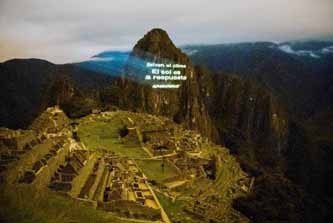
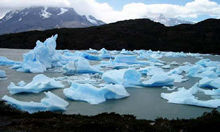 Image: Perito Moreno glacier in Argentina. Photo courtesy of
Massimo Musetta (maxim970@tiscali.it) and inserted in Chile and
Bolivia. Travelogue January 2003 (copyright 2003).
Image: Perito Moreno glacier in Argentina. Photo courtesy of
Massimo Musetta (maxim970@tiscali.it) and inserted in Chile and
Bolivia. Travelogue January 2003 (copyright 2003).